Outerwear, explained
Jacket for Men
Every Style, Fabric and How to Choose
One good jacket can carry you through a Delhi winter, a Mumbai monsoon and a cousin's sangeet. Start with your weather and your plans, then pick the fabric and fit that suit both.
Classic jackets
5 guides
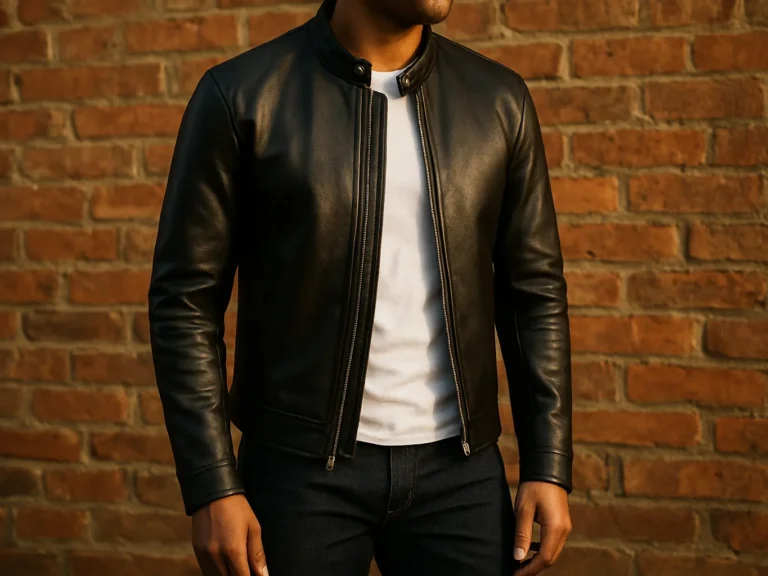 Classic jacketsLeather Jacket for MenStyles, Leather Types and Care
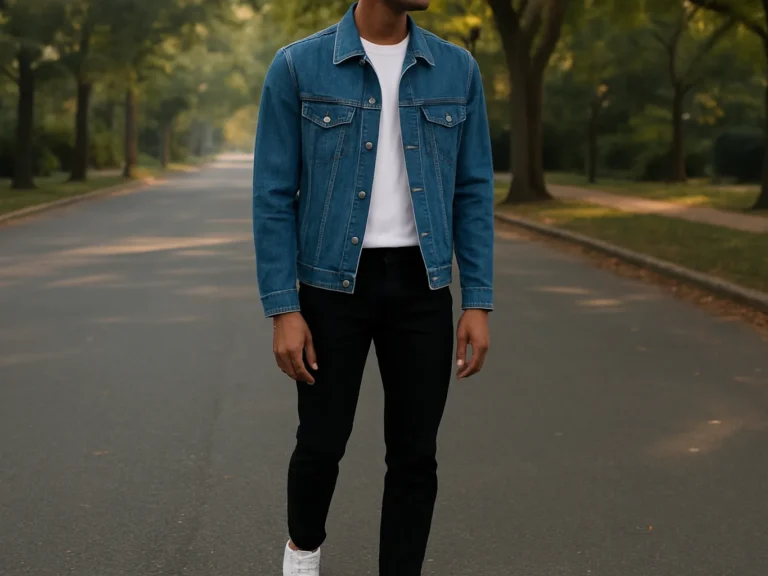
 Classic jacketsDenim Jacket for MenFits, Washes and Outfits
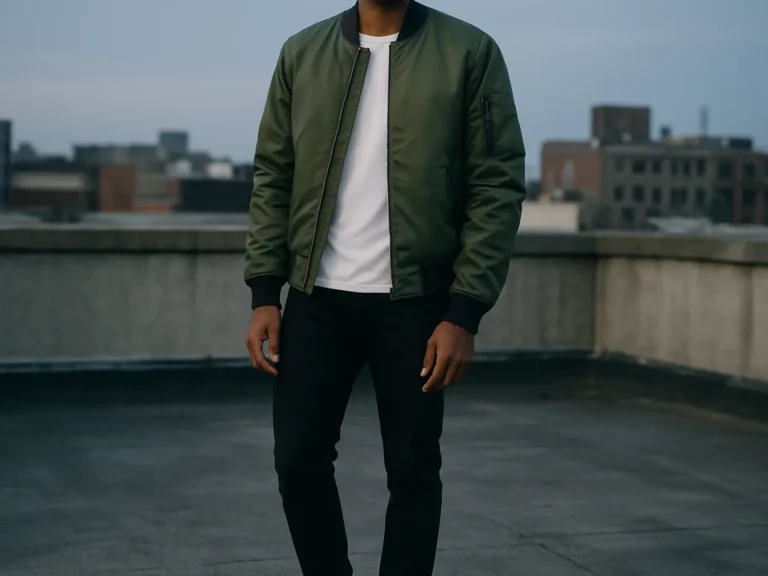
- Classic jacketsBomber Jacket for MenStyles and How to Wear One
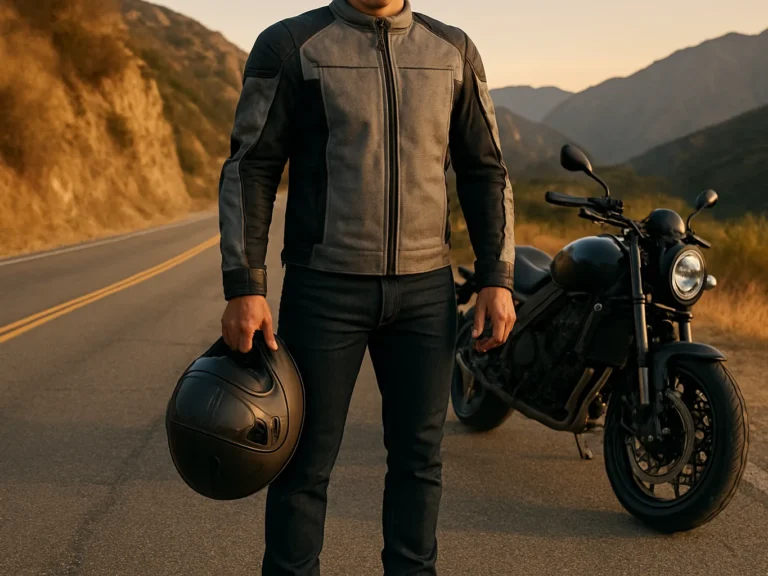
- Classic jacketsBiker Jacket for MenRiding Jackets vs Fashion Bikers
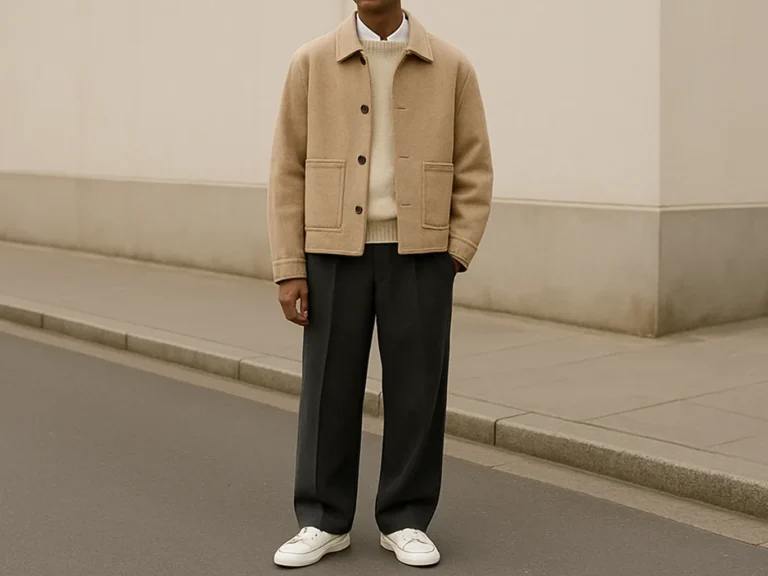
- Classic jacketsTrending Jackets for MenKorean, Oversized, Crop and Suede
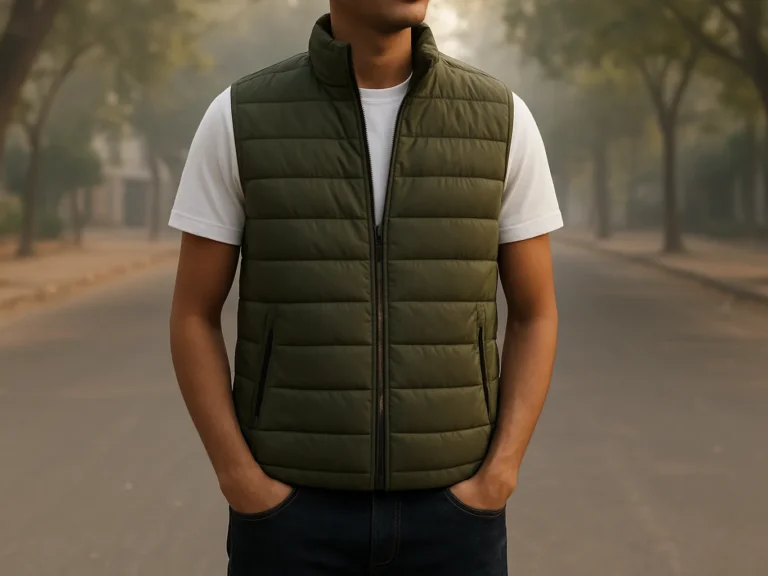
Rain, wind and sport
4 guides
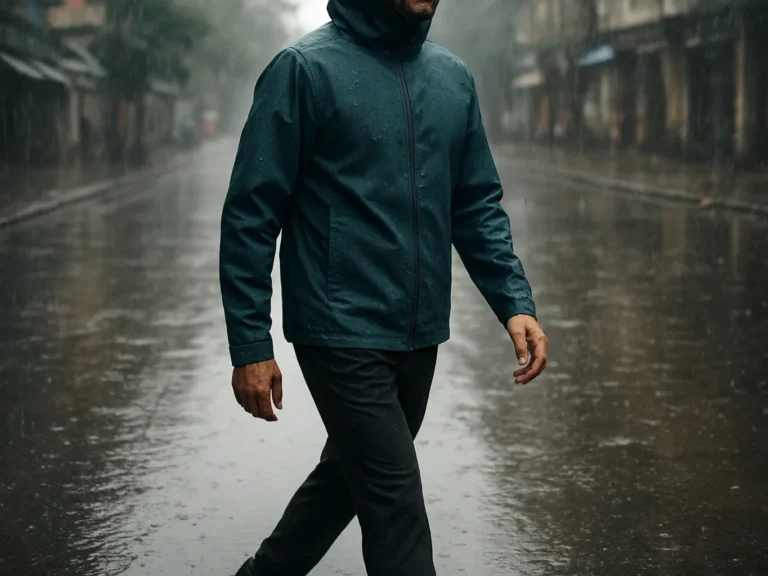
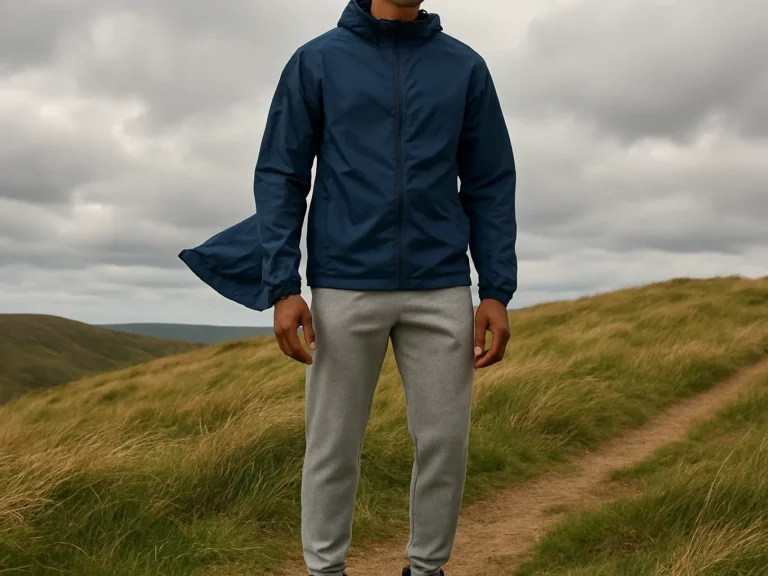
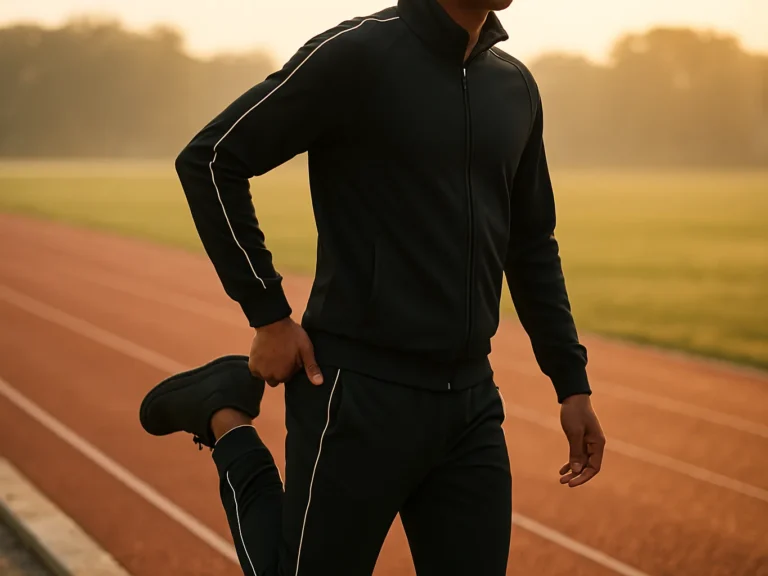
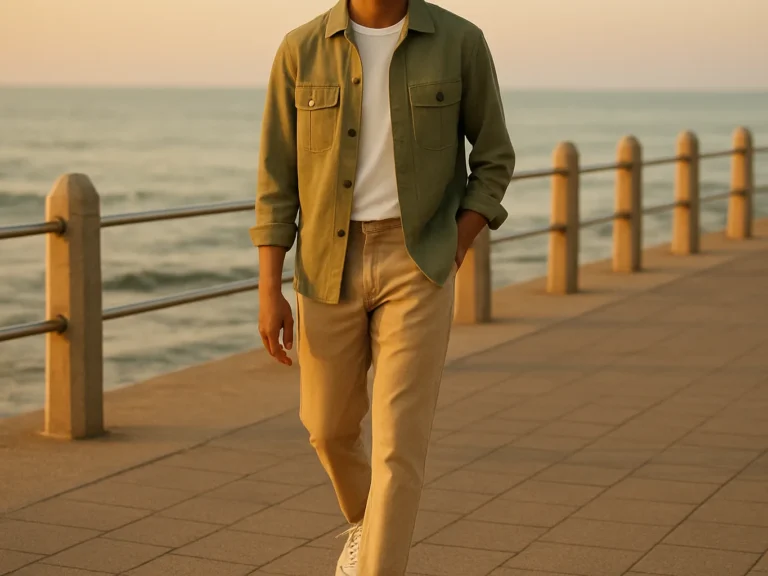
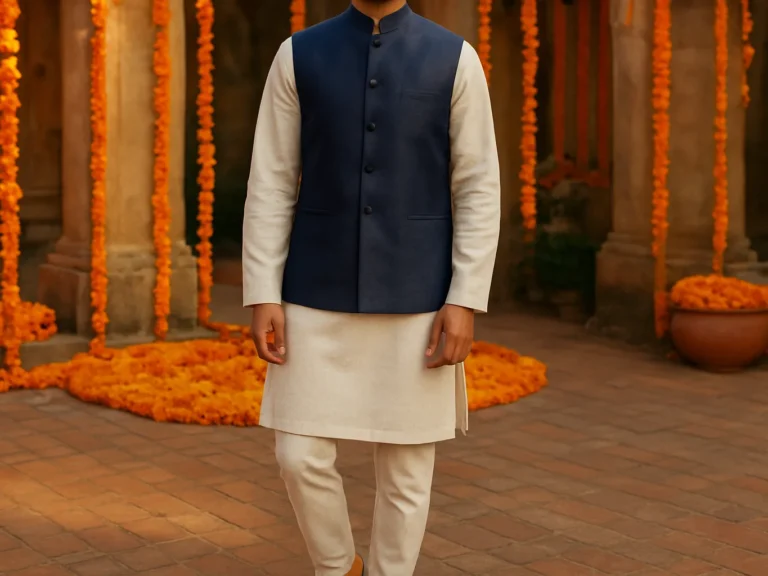
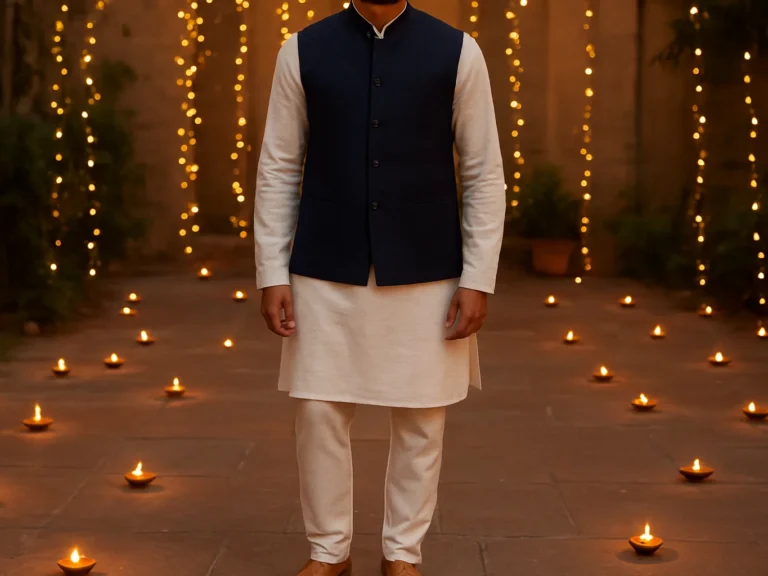
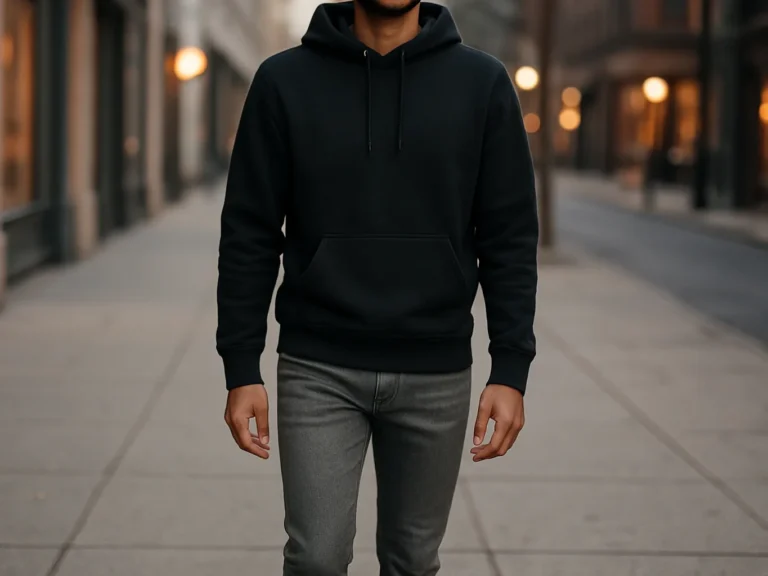
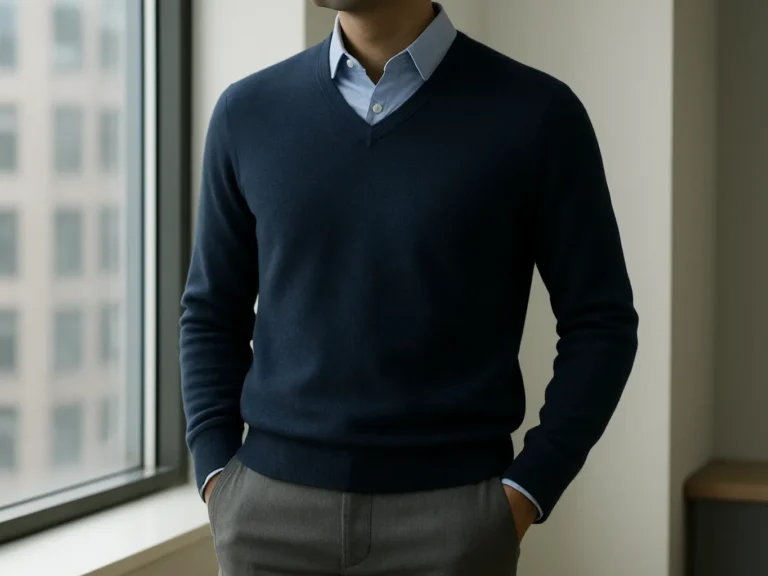
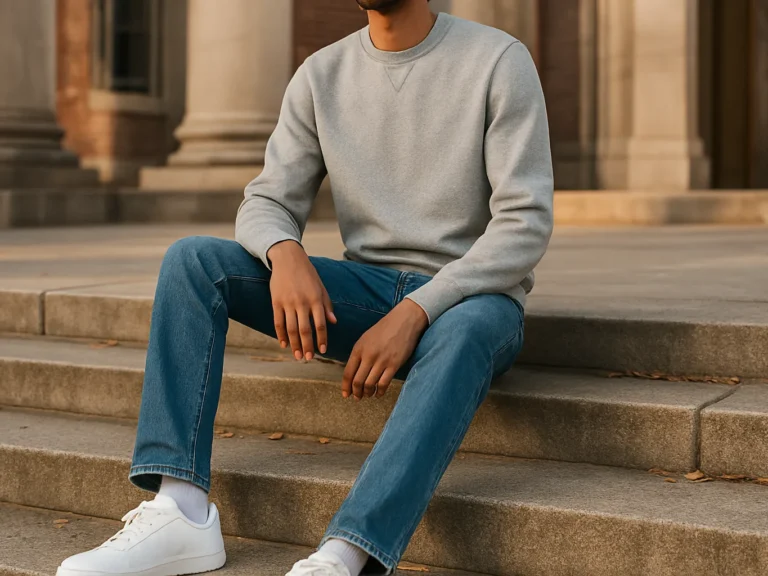
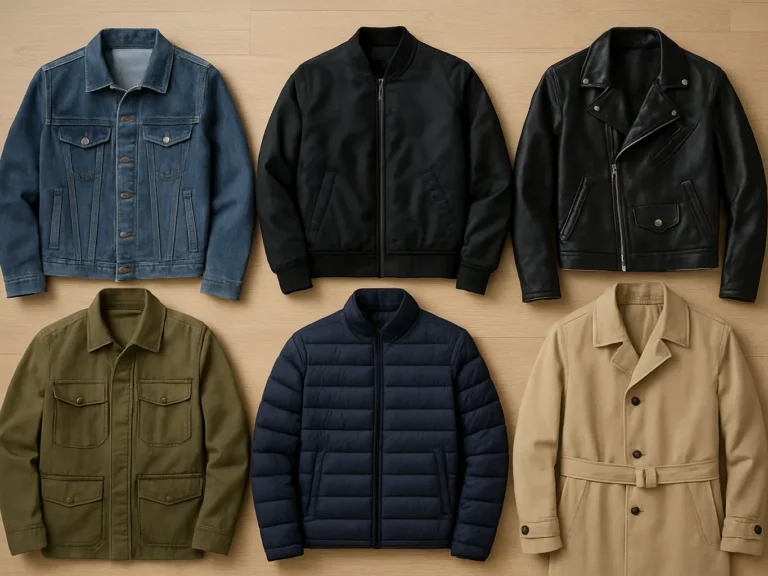
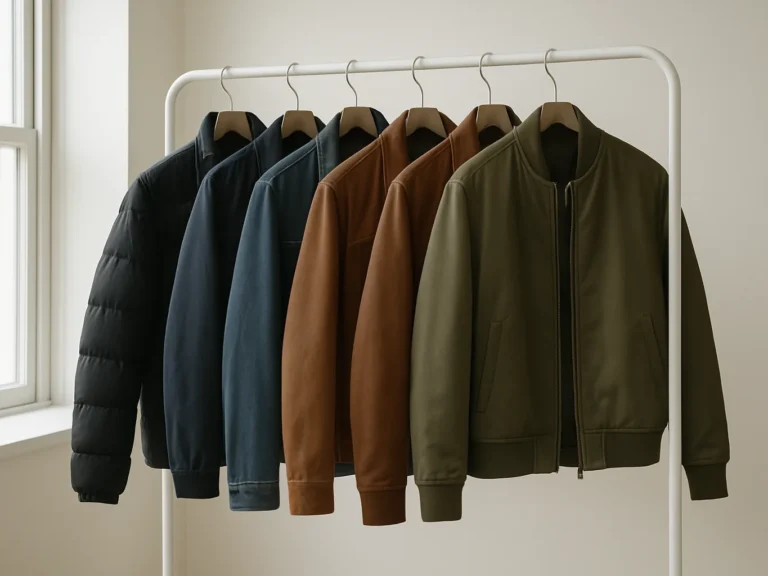
Searching for a jacket for men throws up hundreds of styles, and most guides simply list them. This site works the other way round. We start with the job the jacket has to do: keep out wind on a bike, survive a monsoon commute, keep you warm on a Manali trip or finish a kurta at a wedding. Once the job is clear, the right style, fabric and fit follow.
Use the jacket finder above for a quick match, then read the sections below. Each one points you to a detailed guide, so you can go deep on the jacket you actually need instead of scrolling past ones you never will.
Jackets for men by weather
India has several climates in one country, so a single list of the best jackets for men never works for everyone. Match the jacket to your coldest, wettest or windiest days first.
| Weather | What works | Read next |
|---|---|---|
| Mild evenings, 18 to 25°C | Denim, cotton overshirt, light bomber | light jackets |
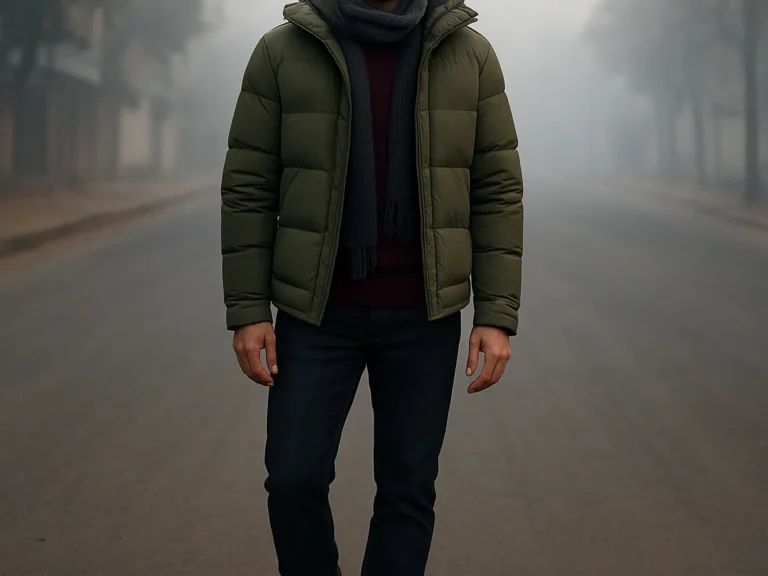
| North Indian winter, 5 to 15°C | Padded or puffer jacket over a sweater | winter jackets |
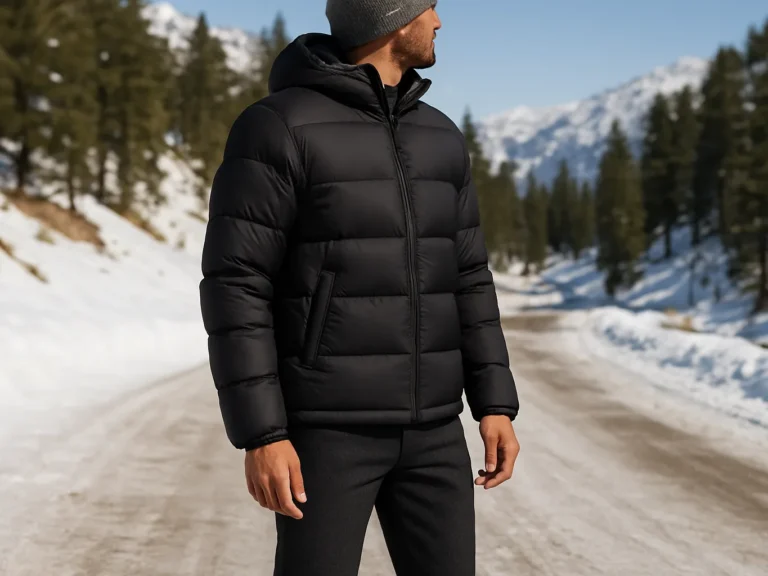
| Hill station or snow trip | Down or synthetic puffer with a hood, plus layers | puffer jackets |
| Monsoon downpour | Waterproof jacket or raincoat with taped seams | rain jackets |
| Windy, dry or drizzly | Packable nylon shell | windcheaters |
If your winter is short and mild, as in Pune or Bengaluru, a lined denim or bomber may be all you need. If you face real cold, think in layers rather than one heavy coat.
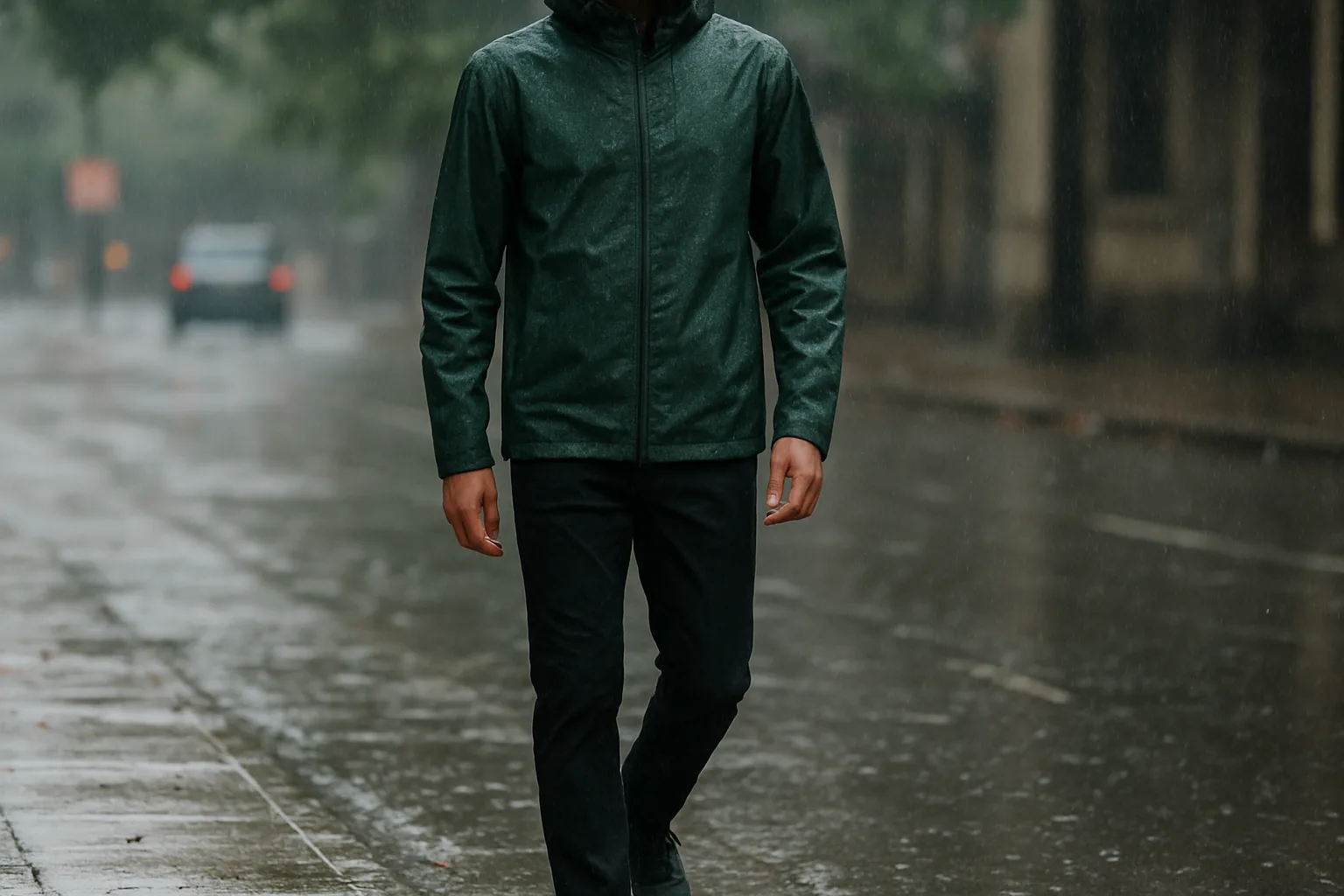
Jackets by occasion: office, weddings, weekends and riding
The same man may need a smart layer for the office, something festive for a mehndi and something tough for the weekend ride. Here is how to cover each without overbuying.
- Weddings and festivals: a Nehru jacket or bandi is the easiest upgrade to a plain kurta. See our guide to kurta with jacket combinations for colour pairings.
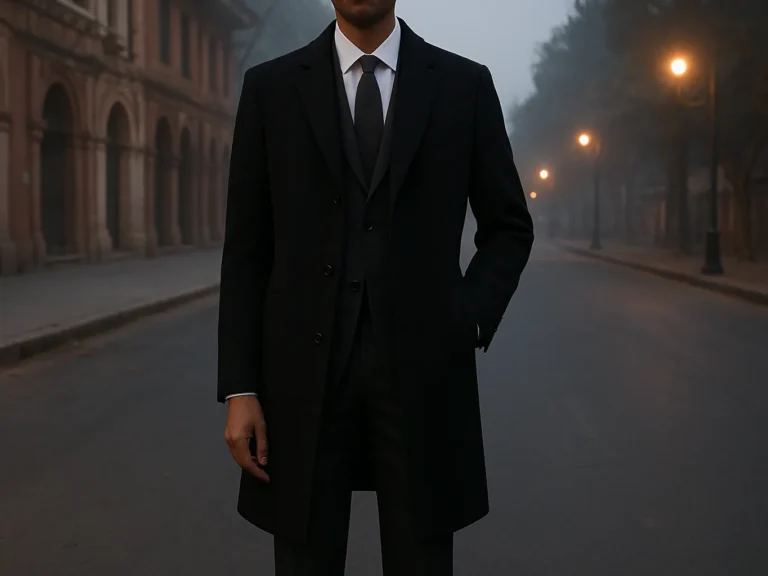
- Office and formal: a dark wool overcoat over a suit, or a fine knit under a blazer.
- Parties and evenings out: a black leather jacket or a sharp bomber looks stylish with dark jeans.
- Gym, running and travel: track and sports jackets move with you and pack small.
- Riding a motorcycle: a certified riding jacket is safety gear, which a fashion biker jacket is not.
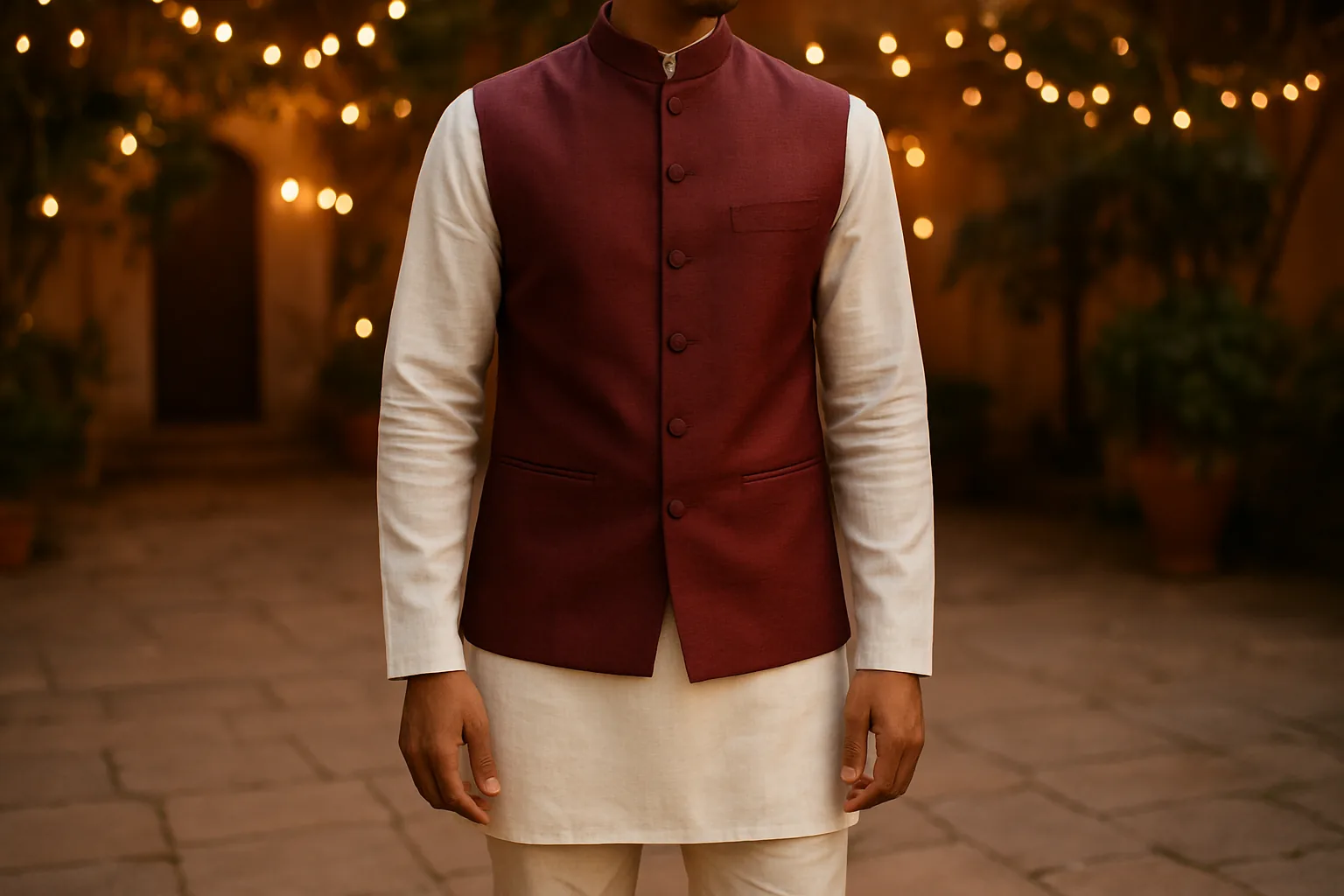
Jackets by fabric: leather, denim, cotton, khadi and nylon
Fabric decides how a jacket feels in heat, how it ages and how you clean it.
- Leather blocks wind, softens with wear and needs conditioning. Full grain comes from the top layer of the hide; suede is the napped flesh side or split. Our leather jacket guide explains grain types.
- Denim is tough cotton twill and gets better with age. Start with mid-blue in a regular fit; the denim jacket guide covers washes and weights.
- Cotton and khadi breathe well and suit Indian summers and festive half jackets. Cotton half jackets and sleeveless cotton jackets for mens wear are popular over kurtas.
- Nylon and polyester are light, quick drying and wind resistant, so they dominate rainwear, windcheaters and puffers.
- Wool is warm and handles moisture vapour well; it is the base of coats, sweaters and Nehru jackets for winter weddings.
Knitwear, hoodies and sleeveless layers
Most winter outfits are built from a jacket plus a mid layer. Get the mid layer right and you need a lighter jacket.
- Sweaters and cardigans in wool or a wool blend are the warmest thin layer.
- Sweatshirts in cotton fleece are casual, washable and cheap to run.
- Hoodies add a hood for wind and work under denim or bomber jackets.
- Sleeveless jackets and gilets warm the core while leaving your arms free, which is ideal for riding a scooter or working at a desk.
Three in one jackets, which pair a shell with a zip-in fleece or padded liner, follow the same logic: wear the shell for rain, the liner for a cool evening, and both together for proper cold.
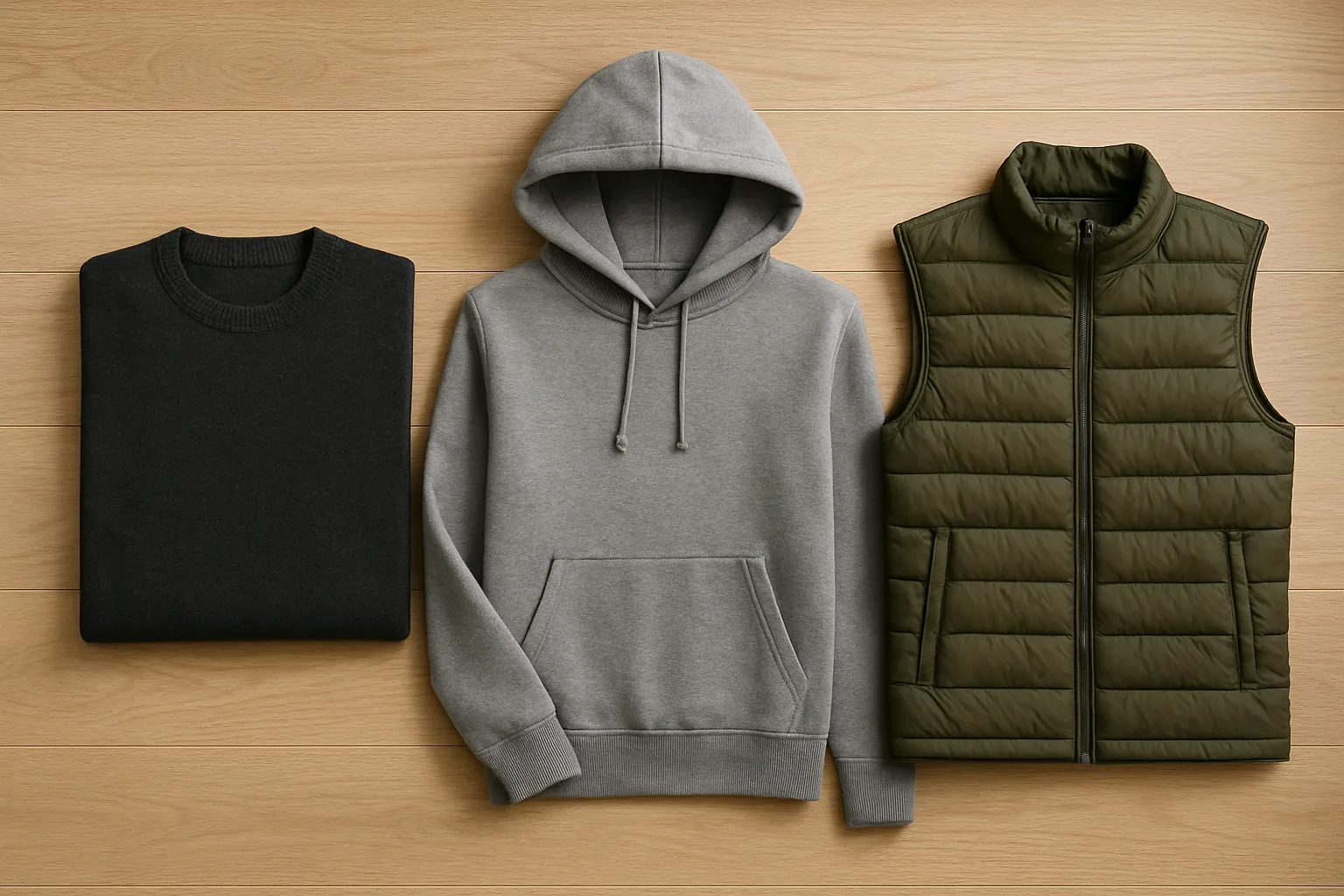
Popular jacket types at a glance
Still unsure what a coach jacket or a shacket is? Our visual guide to the different types of jackets for men shows 16 styles side by side. If you want the newest looks, such as Korean oversized fits, crop jackets and suede, read trending jackets for men. For a stylish jacket for men that will last more than one season, though, the classics win: a denim trucker, a bomber, a leather jacket and a dark padded winter jacket cover almost every situation.
How to choose a jacket in five steps
- Name the job. Write down the coldest or wettest situation you need it for, such as a two-wheeler commute in January.
- Pick the protection. Waterproof, windproof, warm, or just a style layer. Each points to a different jacket.
- Choose the fabric. Leather and wool for durability and warmth, nylon for rain and wind, cotton for mild weather.
- Measure your chest. Wrap the tape under your arms around the fullest part of the chest, then compare with the brand's own size chart. Indian brands still use different charts, so never assume your size.
- Check fit with the layers you will wear. Try it over a sweater or hoodie. The shoulder seam should sit on your shoulder bone and you should reach forward without the back pulling tight.
Branded jackets for men: what to look for
Many readers search for branded leather jackets for mens or woodland winter jackets for mens. A brand name is a starting point, not a guarantee. Our jacket brands guide lists what popular brands sold in India are known for, with a checklist to judge any jacket in the shop: zips, seams, lining, care label and fabric content. Read the label before the logo.
Questions men ask
Which jacket is best for men in Indian winter?
For most north Indian cities, a padded or puffer jacket over a sweater is the most practical choice. It is warm, light and easy to layer. In milder cities a lined denim jacket or bomber over a hoodie is often enough. For snow trips, add a hood, a warm mid layer and gloves.
What are the different types of jackets for men?
The main types are leather, denim, bomber, puffer, windcheater, rain jacket, riding jacket, Nehru jacket, overcoat, sports or track jacket, sleeveless gilet and light cotton overshirts. Each solves a different problem, from rain and wind to weddings and office wear. Our visual guide to jacket types shows them side by side.
How should a jacket fit a man?
The shoulder seam should sit on the edge of your shoulder bone, sleeves should end around the wrist bone, and you should be able to cross your arms without strain. Leave room for the layers you plan to wear underneath. Check the brand's own size chart, because sizing still varies between brands.
Which jacket is good for daily wear?
A mid-blue denim jacket or a plain bomber in navy, olive or black works for daily wear in most of India. Both go with jeans, chinos and T-shirts, and both are easy to clean. In a long, cold winter, a dark padded jacket becomes your daily layer instead.
Are cotton jackets for men good for summer?
Yes. Light cotton jackets, overshirts and shackets breathe better than synthetic shells and work for air-conditioned offices and cooler evenings. Choose unlined styles in lighter colours. Cotton half jackets also suit kurtas at summer functions where a heavier wool bandi would feel too warm.
What is a three in one jacket?
A three in one jacket is an outer shell with a removable inner layer, usually fleece or padding. You can wear the shell alone for rain or wind, the liner alone for cool evenings, or both together in real cold. It suits travellers who want one purchase for several climates.
Sources: Leather Naturally: leather terminology factsheet · Business Standard: India moves towards standard clothing sizes · Woolmark: wool fibre. Updated 14 October 2026.