

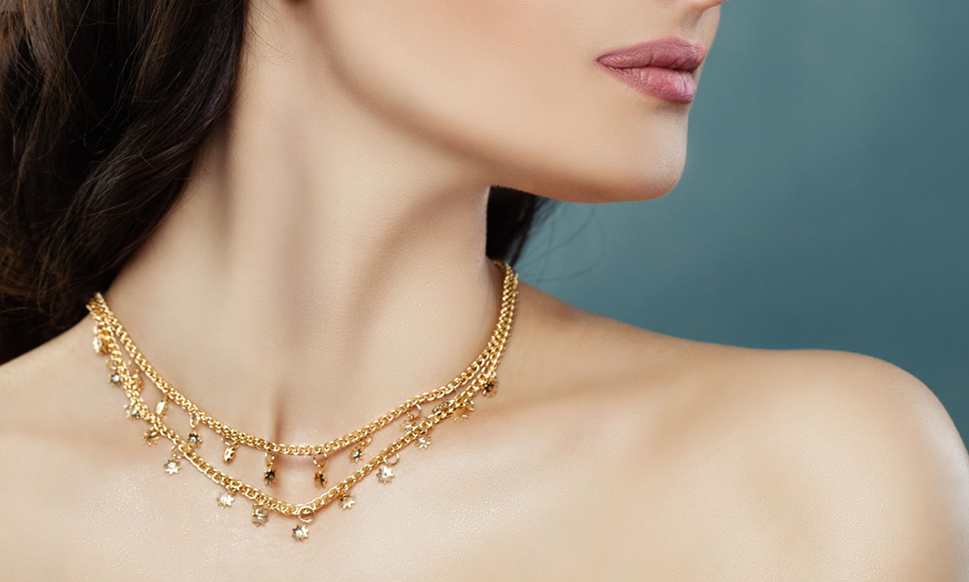
Layering works when each piece holds a clear visual position. A necklace can add dimension without making casual clothing feel crowded. The effect comes from spacing, changing lengths, and controlled detail. Short chains frame the collarbone, while longer strands guide attention downward. That movement creates depth without demanding extra decoration. Clothing shape also matters because every neckline gives jewellery a different room. Once those relationships become familiar, everyday combinations feel easier to arrange. The result depends less on quantity and more on thoughtful placement.
Different Lengths Establish Clear Visual Space
Length creates the first sense of order. A short chain rests near the collarbone. Another strand can sit slightly lower. A third piece may reach toward the chest. Each distance separates neighboring details from one another. Because those levels remain visible, the arrangement gains depth without looking crowded.
That spacing also helps during movement. Chains can shift while walking or reaching. Close lengths may overlap after simple body movements. Wider gaps reduce that problem and preserve the original arrangement.
Texture Gives Each Layer Its Own Role
Texture brings variety without requiring larger shapes. Smooth links can sit beside finer patterns with ease. Small beads can add surface interest beneath a plain chain. A necklace featuring subtle texture can support stronger pieces nearby. The important point involves visual separation rather than decoration alone.
A useful combination might include these details:
- Fine links can frame the upper neckline.
- Tiny charms can introduce gentle focal points.
- Textured strands can create surface variation.
- Larger elements need extra breathing room.
Each choice contributes something different. Together, those details prevent the arrangement from feeling repetitive.
Clothing Scale Should Guide Jewellery Choices
Clothing already carries its own visual weight. Lightweight fabric can support delicate chains without competition. Heavier material gives larger pieces more balance. A busy pattern needs quieter jewellery around it. Plain fabric can accept additional texture without becoming distracting.
For example, a simple shirt leaves open visual space. A slim chain can occupy the upper area. A medium pendant then creates another stopping point. The lower layer adds length while keeping attention organized.
The same approach works with knitwear. Chunkier fabric can handle stronger chains because both elements share similar visual weight.
Can Pendant Placement Control Attention?
Pendant position changes the direction of visual movement. A small charm near the collarbone keeps attention higher. A longer pendant draws the eye toward the center. Two similar charms placed together can compete for notice. Separating their positions creates clearer visual order.
Pendant variety can also prevent repetition. Consider these practical choices:
- Keep noticeable charms at different heights.
- Give larger pendants quieter surrounding space.
- Let one focal piece lead the arrangement.
- Avoid stacking identical shapes together.
This creates rhythm without making the neckline feel busy.
One Anchor Keeps Layers Visually Balanced
Every arrangement benefits from one noticeable centerpiece. That element might feature an unusual shape or stronger finish. Supporting strands then provide structure around it. Because attention has a clear starting point, smaller details remain easier to appreciate.
A collar-length chain can establish the upper boundary. A pendant may then create movement below. A longer strand can finish the sequence without adding another dominant feature. This arrangement feels intentional because each layer serves a different purpose. Still, restraint remains important. Adding another bold element can weaken the visual hierarchy.
Neckline Shape Changes The Entire Arrangement
Neckline shape provides a natural guide for placement. Open collars create room for graduated chains. Crew necks often favor shorter pieces above fabric. V-shaped openings can suit pendants following the same direction. High necklines may need longer strands for visible separation.
Fabric movement deserves attention as well. Jewellery should remain practical during ordinary activities. Chains that constantly cross can become tangled or uncomfortable. Slightly wider spacing helps each strand maintain its position.
A balanced arrangement therefore considers both appearance and movement. Style becomes easier when practical details support visual planning.
Spacing Turns Decoration Into Structure
A collarbone chain, separated pendant, and longer strand create depth through simple distance. That small gap between pieces does more than prevent tangling. It gives the eye separate points to follow. As a result, ordinary jewellery can shape an outfit without taking control. The strongest combinations often leave enough space for every detail to breathe.


