Classic jackets
Biker Jacket for Men: Riding Jackets vs Fashion Bikers
A biker jacket from a fashion store and a riding jacket from a motorcycle gear shop can look alike. Only one is built and tested to protect you in a crash. Here is how to tell them apart.
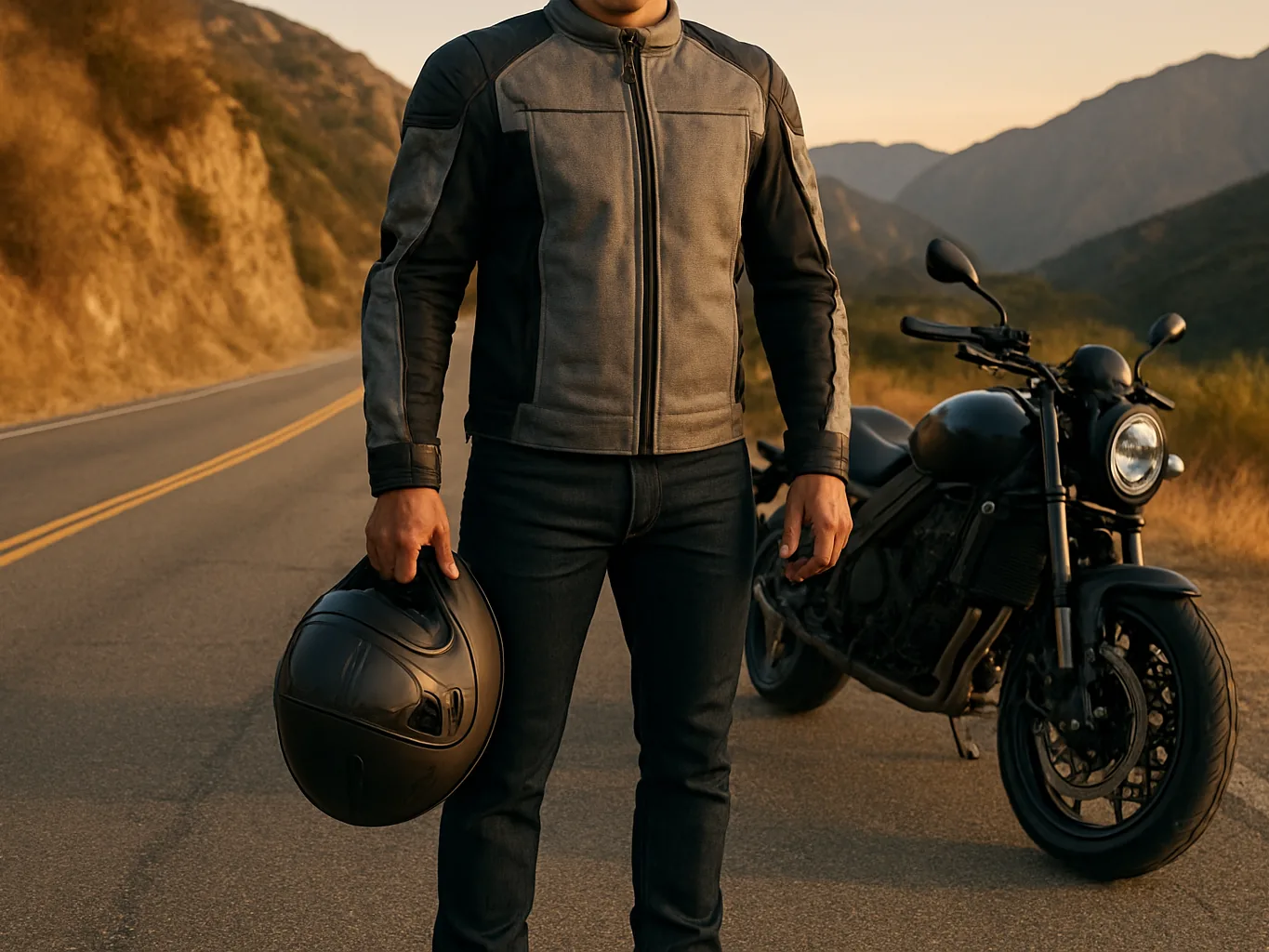
Let us be clear from the start: a fashion biker jacket is not protective gear. The asymmetric leather jacket sold in clothing stores is designed for looks. It usually has no armour, thin leather or synthetic, and stitching that is not built to hold together when you slide along a road. A riding jacket for men is different. It is built from abrasion-resistant materials, carries impact protectors at the shoulders and elbows, and is tested to a standard.
This guide explains those standards in plain language so you can read a label, choose the right class for Indian riding, and still look good off the bike.
EN 17092: the protection classes for riding jackets
EN 17092:2020, in parts 1 to 6, sets protection classes for motorcycle rider garments, covering material, construction and ergonomic requirements. The Belgian textile research centre Centexbel summarises the classes like this:
| Class | Standard part | What it means |
|---|---|---|
| AAA | EN 17092-2 | Highest abrasion resistance; typical example is one- or two-piece leather racetrack suits, with low ergonomic flexibility |
| AA | EN 17092-3 | Relatively high abrasion resistance, intended for touring with weather protection |
| A | EN 17092-4 | Light and flexible for leisure and city riding; lowest abrasion level of the impact-protected classes |
| B | EN 17092-5 | Abrasion protection only, no impact protection |
| C | EN 17092-6 | Impact protector ensembles on a mesh carrier; impact protection only |
Look for the class printed on the label inside the jacket. Classes AAA, AA and A include impact protection. A Class B garment protects against abrasion only, so you would add separate armour, and Class C is an armour carrier rather than a full jacket.
EN 1621: armour levels explained
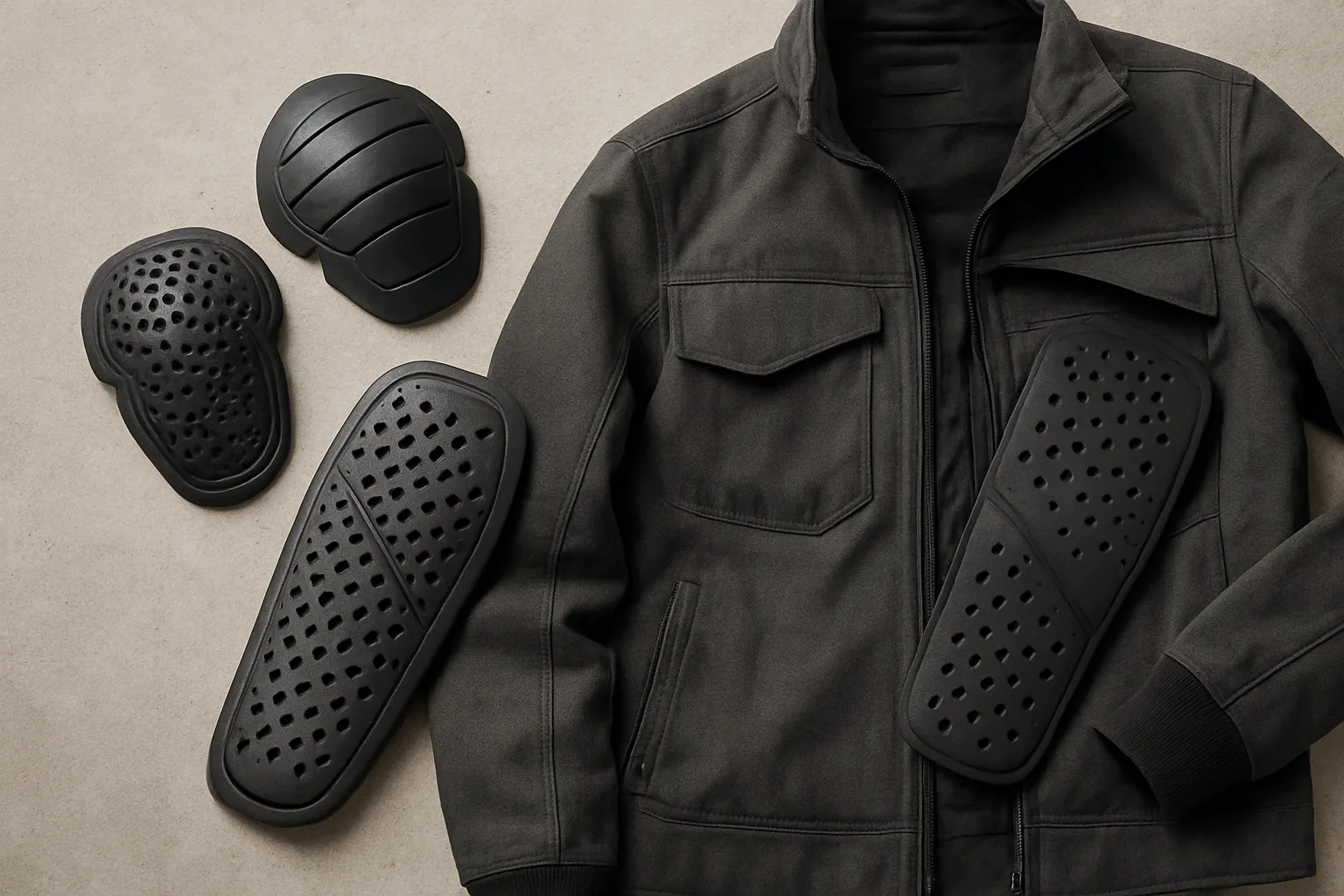
Armour is tested separately under EN 1621. A protector is struck with a set impact, and the force that passes through it is measured in kilonewtons (kN). Less force through means better protection.
- EN 1621-1 (shoulder, elbow, hip, knee): tested with 50 J impact energy. Level 1 requires an average transmitted force under 35 kN, with no single result over 50 kN. Level 2 is commonly cited as requiring an average under 20 kN.
- EN 1621-2 (back protectors): Level 1 allows no more than 18 kN transmitted; Level 2 under 9 kN. Commonly cited maximum single values are 24 kN for Level 1 and 12 kN for Level 2.
- EN 1621-3 covers chest protectors and EN 1621-4 covers airbags.
Some riding jackets include shoulder and elbow armour but only a foam pad in the back. Check the back protector label; upgrading to an EN 1621-2 protector is often possible.
What about Indian standards?
In India, BIS-certified helmets to IS 4151:2015 have been legally required since 2021 under a Quality Control Order. No BIS or Indian standard for motorcycle riding jackets has been identified, and Indian riding jackets typically cite the European CE standards above. So, when you buy a riding jacket in India, look for EN 17092 class marking on the jacket and EN 1621 marking on each protector.
Mesh, textile or leather: choosing for Indian weather
Mesh riding jacket
Large mesh panels let air through, so it is the best biker jacket for men in summer and humid cities. Usually lighter on abrasion protection; look for reinforced shoulders and elbows.
Textile touring jacket
Polyester or nylon shells, often with removable rain and thermal liners. Versatile for highways, tours and the monsoon.
Leather riding jacket
High abrasion resistance and a classic look, but hot in Indian summers. Best for winter, track days and long highway rides. Not the same as a fashion leather jacket.
Waterproof riding jacket
A built-in or zip-in membrane for rain. For the heaviest monsoon days, many riders wear a separate rain shell or two-piece raincoat over a mesh jacket. See our raincoat guide for ratings.
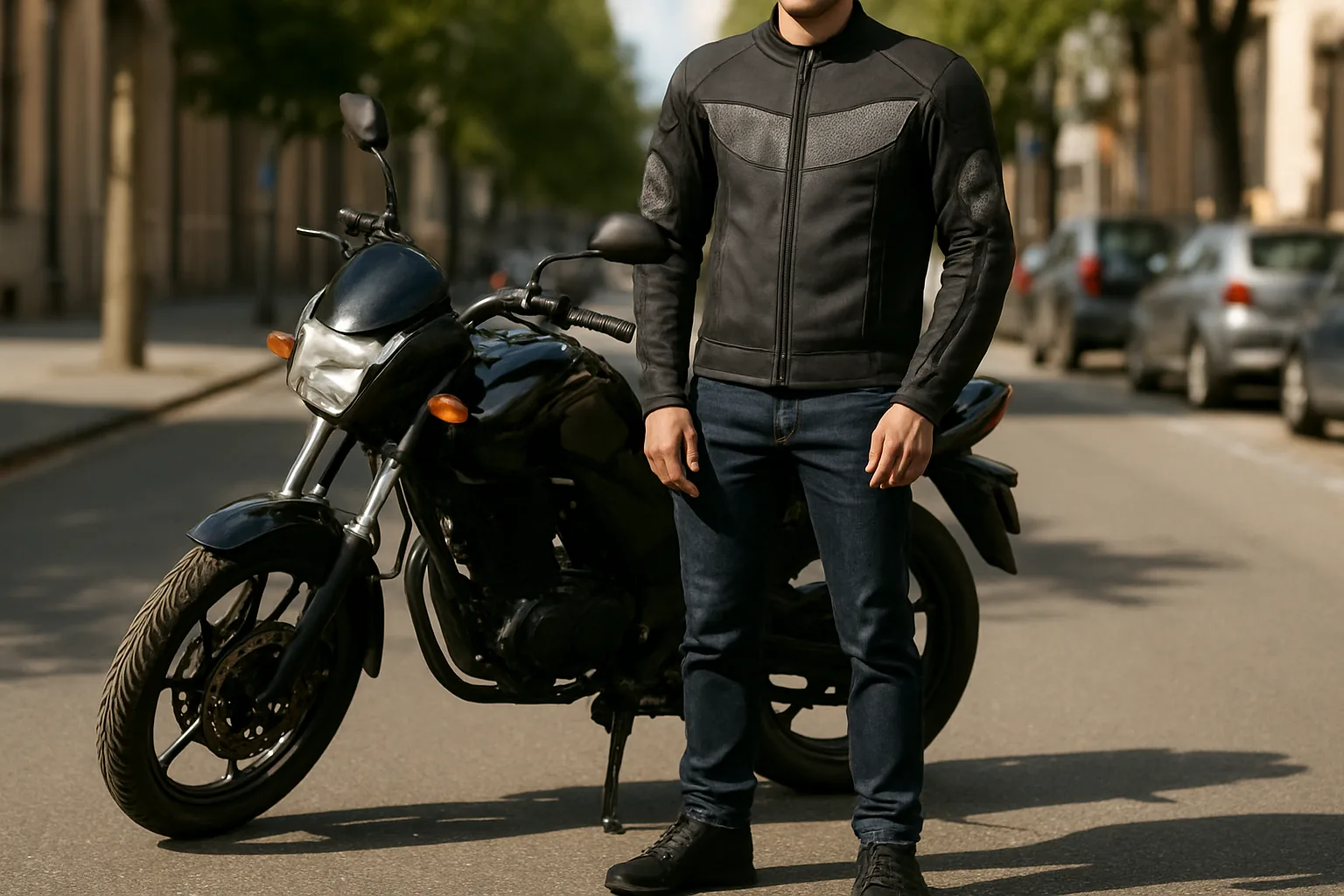
Fashion biker vs riding jacket at a glance
| Fashion biker jacket | Certified riding jacket | |
|---|---|---|
| Purpose | Style | Protection in a fall |
| Armour | Usually none | EN 1621 protectors at shoulders and elbows, often back |
| Label | Fabric and care only | EN 17092 class (AAA, AA, A, B or C) |
| Construction | Ordinary seams, thin materials | Abrasion-resistant materials and seams |
| Fit | Cut for standing | Cut for riding position, longer back and sleeves |
Enjoy fashion biker jackets for style. Just do not rely on one to protect you on a motorcycle.
How to fit a riding jacket
- Sit on a bike or in a riding position. Reach for the handlebars and check the sleeves still reach your wrists.
- Check armour placement. Elbow armour should sit on the point of the elbow; shoulder armour should cap the shoulder, not slide down your arm.
- Make it snug. Loose jackets let armour move away from where it is needed in a crash. Use the waist and arm adjusters.
- Check the back. The hem should cover your lower back while leaning forward.
- Layer test. Try it with the liners in and with the clothes you will ride in.
- Check the labels. Find the EN 17092 class on the jacket and EN 1621 markings on each protector.
Looking good on and off the bike
Dark, solid riding jackets in black, grey or olive look the least like costume when you step off the bike. Pair them with dark jeans, sturdy boots and a plain T-shirt or hoodie for colder rides. If you love the asymmetric biker look for evenings, buy it as fashion and keep separate gear for riding. A windcheater blocks wind on short rides but, like a fashion jacket, offers no crash protection. More outerwear by occasion is on our jacket for men hub.
Questions men ask
Is a leather biker jacket safe for riding?
Only if it is a riding jacket certified to EN 17092, with EN 1621 armour. A fashion leather biker jacket from a clothing store is not protective gear: it usually has no armour, thinner material and ordinary seams. Check the inside label for an EN 17092 class before relying on any jacket on a motorcycle.
Which riding jacket is best for Indian summer?
A mesh riding jacket with CE-certified shoulder and elbow armour is the most comfortable for Indian summers. Check the EN 17092 class on the label; Class A is meant for leisure and city riding. Add a back protector rated to EN 1621-2, and carry a rain shell for monsoon showers.
What do EN 17092 classes AAA, AA and A mean?
They are protection classes for motorcycle garments. AAA has the highest abrasion resistance, typical of leather racetrack suits. AA has relatively high abrasion resistance for touring with weather protection. A is light and flexible for city and leisure riding. All three include impact protection; Class B does not.
What is the difference between Level 1 and Level 2 armour?
Under EN 1621, Level 2 protectors let less force through than Level 1. For limb armour, Level 1 allows an average under 35 kN, while Level 2 is commonly cited as under 20 kN. For back protectors, Level 1 allows up to 18 kN and Level 2 under 9 kN.
Is there an Indian standard for riding jackets?
No BIS or Indian standard for motorcycle riding jackets has been identified. BIS-certified helmets to IS 4151:2015 have been mandatory since 2021. Riding jackets sold in India usually cite European CE standards, so look for EN 17092 on the jacket and EN 1621 on the armour.
Can I wear a raincoat over a riding jacket?
Yes. Many Indian riders wear a two-piece raincoat or rain shell over a mesh riding jacket in the monsoon, because mesh breathes well in humidity. Make sure the raincoat is roomy enough to fit over the armour and does not flap at speed.
Sources: Centexbel: EN 17092 protective garments for motorcycle riders · Sweet Protection: CE EN 1621-1 and 1621-2 explained · PIB: BIS helmet Quality Control Order · Wikipedia: motorcycle armor. Updated 14 October 2026.