Classic jackets
Leather Jacket for Men: Styles, Leather Types and Care
A good leather jacket is one of the few things a man can wear for twenty years. The secret is knowing which leather you are buying, choosing a fit that suits your frame, and caring for it properly.
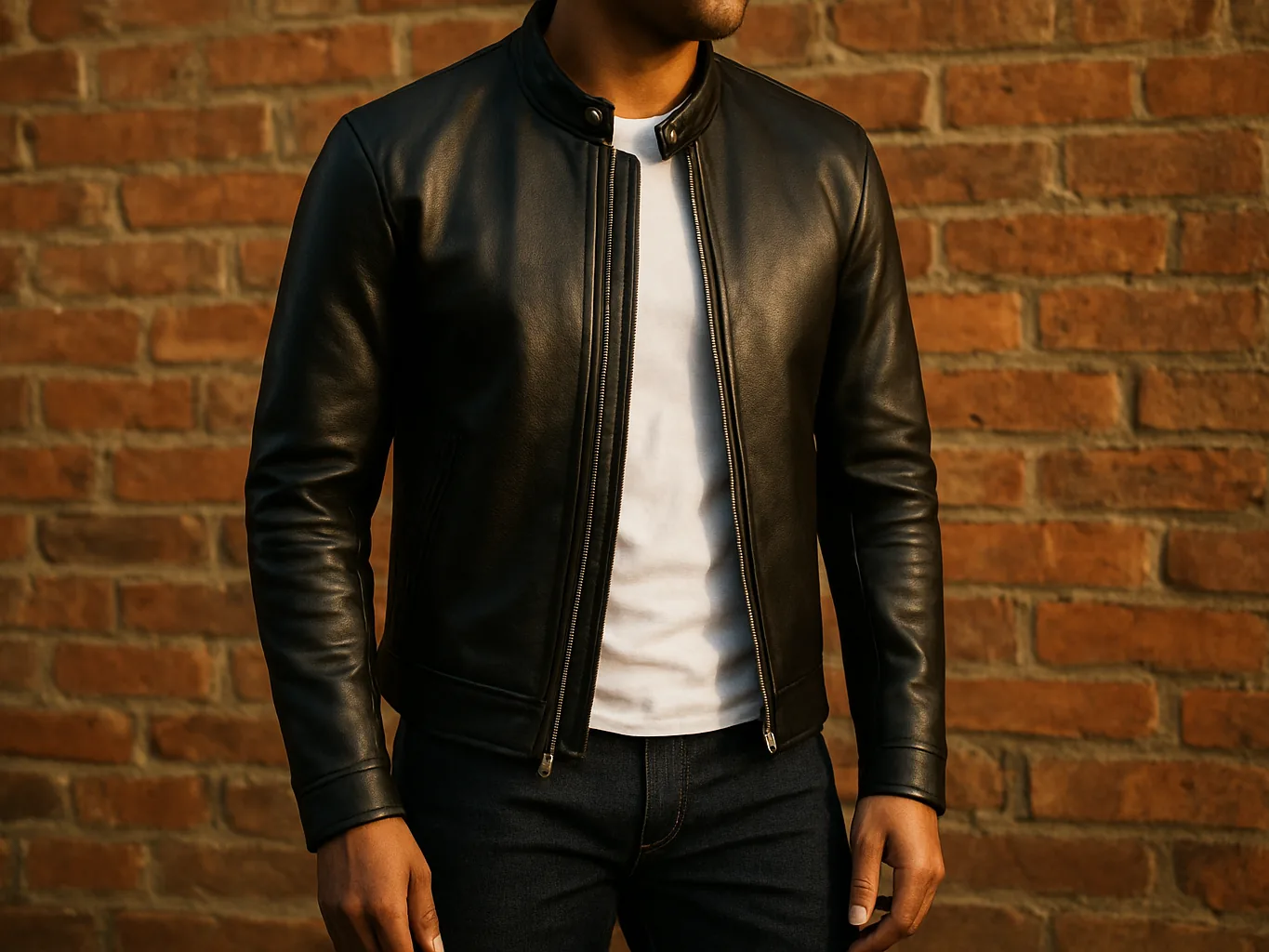
A leather jacket for men is the rare piece that looks better with age. It blocks wind, moulds to your shoulders and makes a T-shirt and jeans look deliberate. It is also easy to get wrong. Labels like "pure leather" and "genuine leather" tell you less than you think, and a jacket that is too roomy in the shoulders never looks right.
This guide covers the leather itself, the main styles, colour, fit and care. If you need protection on a motorcycle, read our riding jacket guide instead, because a fashion leather jacket is not riding gear.
Leather types explained: full grain, top grain, split and bonded
Leather is hide or skin with its original fibrous structure more or less intact, tanned so it does not rot. What matters is which part of the hide you get and how the surface has been treated. These definitions come from the industry body Leather Naturally, with one commonly used trade term noted.
| Type | What it is | What it means for a jacket |
|---|---|---|
| Full grain | Leather from the top layer of the hide or skin, natural surface intact | Toughest, ages with character, shows natural marks |
| Top grain / corrected grain | Commonly described as top grain that has been lightly buffed or sanded and given an embossed grain print | More uniform look, less character as it ages |
| Split | The underneath section after the hide is split, mostly used to make suede | Softer and weaker than grain leather |
| Suede | The flesh side of leather, or split leather, with a napped look | Soft, casual, hates rain |
| Nubuck | Grain surface buffed to a velvet-like touch | Suede look with more strength |
| Bonded | Leather dust, clippings and shavings bonded together, usually with a synthetic substance | Can peel and crack; avoid for a jacket you want to keep |
Nappa is a common label for soft leather from calf, lamb or kid. It is a generic term with no distinct test, so treat it as a feel rather than a grade. Words like "pure" or "original" are marketing, not grades. Ask which part of the hide was used.
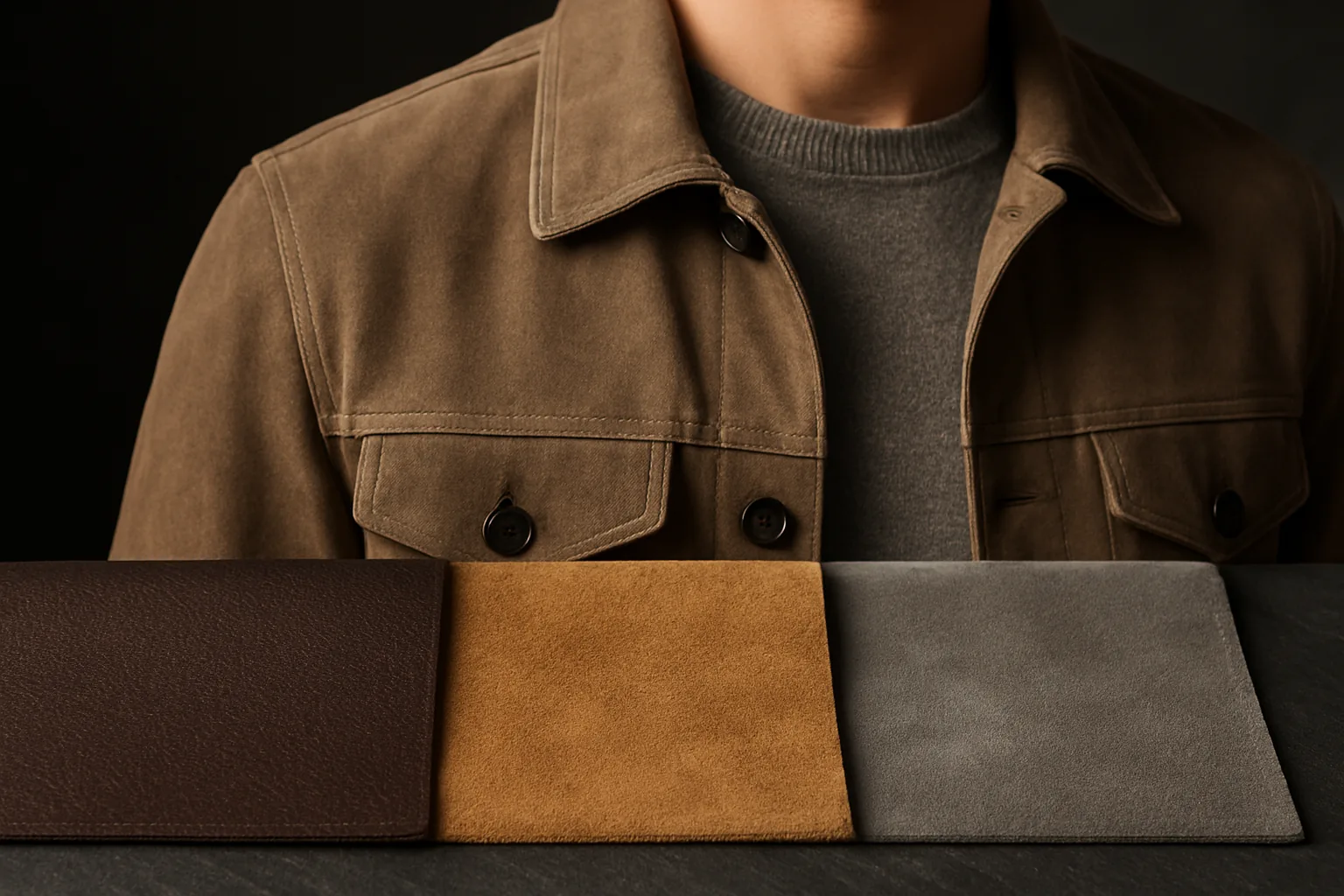
Leather jacket styles: biker, bomber, racer and coat
Biker (double rider)
Asymmetric zip, wide lapels, belt at the hem. The most rebellious look; suits slim and athletic builds and works best in black with dark jeans and boots.
Racer (cafe racer)
Clean front, small band or snap collar, straight zip. The easiest leather jacket for men to wear daily, and the most flattering if you are short, because there are no busy details.
Leather bomber
Ribbed cuffs and hem, relaxed body. Good for broader builds and casual weekends. Our bomber jacket guide covers fabric versions too.
Trucker or shirt jacket
Built like a denim jacket with chest pockets. Smart casual and easy over a polo.
Leather coat
Hip to knee length, worn over knitwear or a blazer. A dark brown leather coat for men is dressier than any short jacket. For wool alternatives see our overcoat guide.
Half sleeve and leather half jacket
Sleeveless or short-sleeved leather pieces are fashion items for parties rather than everyday wear. They suit milder evenings in cities like Bengaluru, Hyderabad or Pune.
Black or brown leather jacket?
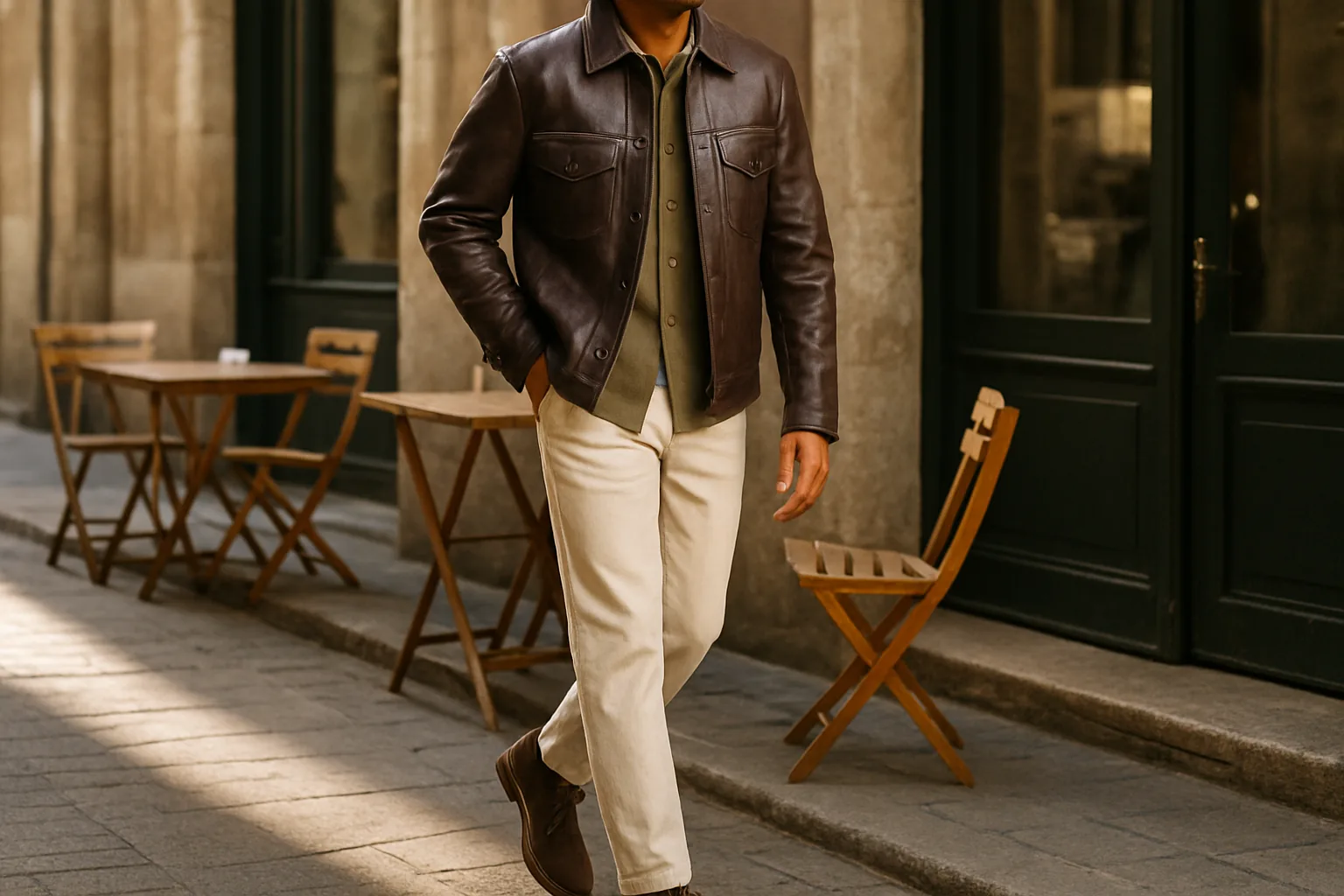
A black leather jacket for men is sharper and more urban. It suits party wear, concerts and night outs, and pairs with black, grey and blue. A brown leather jacket for men is warmer and more relaxed, and it works in daylight with chinos, olive, cream and denim. If you will own only one, pick black for evenings or dark brown for daytime and travel. Tan and cognac show scuffs faster but age beautifully. Oxblood and olive are second-jacket colours.
How a leather jacket should fit
Leather does not stretch much across the shoulders, so buy for your shoulders first.
- The shoulder seam sits on the edge of your shoulder bone.
- Sleeves end at the wrist bone with arms at your sides, and do not ride up more than a little when you reach forward.
- The body closes comfortably over a T-shirt or thin knit. It should not need to fit over a thick hoodie.
- The hem sits at or just below the belt for biker and racer styles.
Measure your chest under the arms at the fullest point and compare with the brand's own chart, because Indian brands still use different size charts.
How to check a leather jacket before buying
- Read the label. Look for the leather type and the lining material. If it only says "genuine leather", ask which part of the hide.
- Look at the edges. Inside seams and pocket edges show cut leather. Bonded leather looks layered or papery at the edge.
- Check the surface. Full grain shows small natural marks and pores. A perfectly even printed pattern suggests corrected grain.
- Test the zips. Metal zips that run smoothly matter on a jacket you will open hundreds of times.
- Smell and feel it. Real leather is supple and warms in your hand. A plastic smell or a cold, slick feel is a warning sign.
- Try the reach test. Cross your arms and reach forward. Tightness across the back means size up or try another cut.
Leather jacket care
Leather care is simple if you do it regularly. Wipe the jacket with a damp, not wet, cloth and blot spills rather than rubbing them. Test any cleaner on a hidden area first. Condition it about once or twice a year with a product made for that leather; suede and nubuck need specialised products. If it gets wet, let it dry naturally away from heaters, hairdryers and direct sun. Store it on a broad padded hanger inside a breathable fabric cover, never sealed plastic, which matters in humid cities during the monsoon. Take heavy soaking, stains or mould to a leather specialist.
How to wear a leather jacket
Keep everything else simple. A white or grey T-shirt, dark jeans and boots or clean white sneakers is the classic outfit. For a party, swap the tee for a black knit polo. In winter, layer a thin merino crew or a fine sweater underneath; skip bulky hoodies under fitted leather. If you prefer a softer, more casual look, a denim jacket does a similar job in warmer months. See more outerwear ideas on our jacket for men hub.
Questions men ask
How can I tell if a leather jacket is genuine?
Check the cut edges inside seams and pockets: real leather shows a fibrous edge, while bonded leather looks layered. Full grain shows natural pores and small marks rather than a perfectly repeated print. Real leather also feels supple and warms in the hand. Ask the seller which part of the hide was used, not just whether it is genuine.
Which leather is best for a men's jacket?
Full grain is the toughest and ages best because it comes from the top layer of the hide with its surface intact. Top grain or corrected grain is a good, more uniform option. Suede is soft but delicate in rain. Bonded leather, made from leather scraps glued together, is the weakest choice for a jacket you want to keep.
Is a black or brown leather jacket better?
Black is sharper and suits evenings, parties and darker outfits. Brown is more relaxed and works better in daylight with chinos, olive and denim. If you are buying your first leather jacket, choose based on what you wear most: mostly black and grey, go black; mostly blue, khaki and earth tones, go dark brown.
Is a leather jacket good for Indian winters?
Yes, especially in north India, where a leather jacket blocks cold wind well. On its own it is not very warm, so layer a thin wool sweater underneath on colder days. In humid coastal cities it is mostly an evening or air-conditioned-venue piece rather than an everyday jacket.
How do I clean a leather jacket at home?
Wipe it with a damp cloth, blot spills instead of rubbing, and test any cleaner on a hidden patch first. Condition it once or twice a year. Never machine wash it. If it gets soaked, dry it slowly away from heaters and sun, and take serious stains or mould to a leather specialist.
Can I wear a leather jacket for bike riding?
A fashion leather jacket blocks wind, but it is not certified protective gear and usually has no armour. For riding, choose a jacket certified to EN 17092 with EN 1621 armour at the shoulders and elbows. Our riding jacket guide explains the classes in detail.
Sources: Leather Naturally: leather terminology factsheet · Esquire India: how to care for a leather jacket · ISO 15115:2019 leather vocabulary. Updated 14 October 2026.