Cold weather
Overcoat and Trench Coat for Men
A good overcoat is the most grown-up piece of outerwear a man can own. Learn the coat styles, why a black coat is so useful, how a trench differs from a peacoat, and how a coat should fit over a suit.
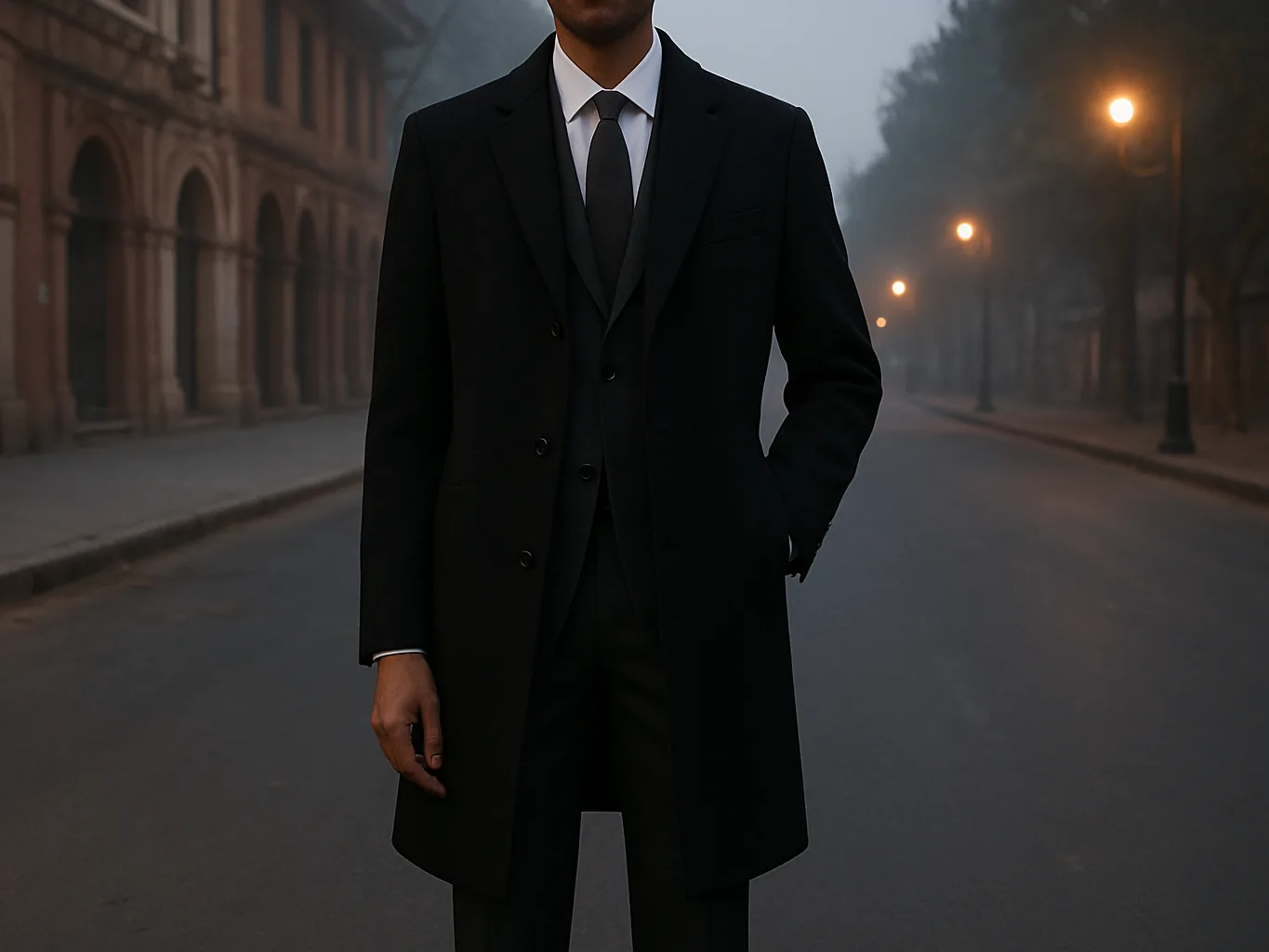
In India, the word "coat" means different things to different people. For some it is the jacket of a suit, as in pant coat. For others it is a wedding prince coat. For anyone heading to Delhi in January, Kashmir, or Europe in winter, it means a long warm overcoat worn over everything else. This page focuses on that last meaning, the overcoat and trench coat, and also sorts out the Indian coat styles people search for.
If you only buy one, make it a black coat for men or a charcoal one in wool. It goes over suits, over kurta and churidar for winter weddings, and over jeans and a sweater on weekends.
Coat for Men: Which Kind Do You Mean?
| Term | What it usually means | Where to read more |
|---|---|---|
| Overcoat / topcoat | A long coat worn over a suit or sweater for warmth | This page |
| Suit coat, pant coat, blazer coat | The tailored jacket of a suit, or a blazer | Your tailor or suit guides |
| Half coat, waist coat | A waistcoat or sleeveless jacket | Sleeveless jackets |
| Modi coat | A Nehru-style sleeveless jacket | Nehru jacket guide |
| Prince coat, Jodhpuri coat | Indian formal coats with high collars | Below |
| Raincoat | A waterproof coat for monsoon | Rain jacket guide |
Why a Black Coat for Men Is So Useful
A black overcoat is the most formal coat colour and the easiest to wear at night. Over a dark suit it is ideal for a winter reception; over a black kurta set it is perfect for a Delhi winter wedding; over a grey sweater and jeans it looks sharp on a weekend. A black coat for men wedding look works best with a slim single-breasted cut that ends at or just above the knee.
The downside is that black shows lint and dust, so keep a clothes brush handy. If you want something a little softer by day, charcoal does almost everything black does. Navy is a smart second coat, and camel or brown coat for men options are the classic daytime choice that look rich over grey, navy and white.
Overcoat Styles and Lengths
- Single-breasted overcoat: one row of buttons, usually a notch lapel (the most common lapel style). Clean and easy over suits. The best first overcoat.
- Double-breasted overcoat: two rows of buttons, usually a peak lapel. More formal and dramatic; it suits taller and slimmer men best.
- Long coat for men: knee length or just below. Warmest and most elegant, best for formal wear and very cold weather.
- Semi long coat: mid thigh. More practical for driving, bikes and shorter men, and easier to wear casually.
- Car coat or short casual coat: hip length, good over jeans and knits.
Wool is the classic overcoat fabric for warmth. For milder Indian winters, a lighter wool blend or an unlined casual coat for men is more comfortable than a heavy melton.
The Trench Coat: History and Features
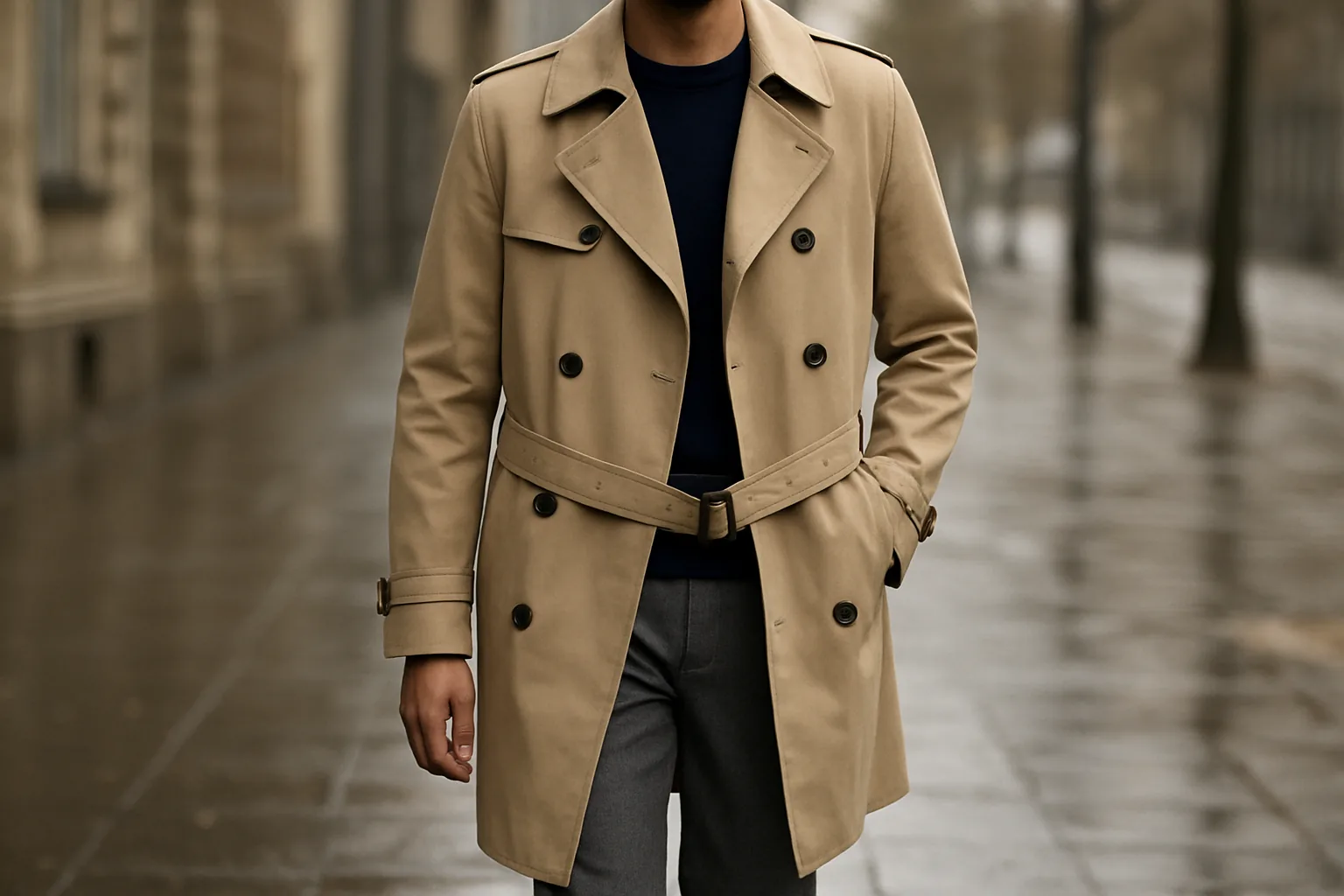
The trench coat took its recognisable form during the First World War, when officers bought their own and wore them in the trenches, while ordinary soldiers mostly had issued greatcoats. The first printed use of the term "trench coat" was in 1916, in a tailoring trade journal. Two British firms claim to have invented it: Thomas Burberry developed gabardine, a breathable weatherproofed twill, in 1879, and John Emary's water-repellent fabric of 1853 led to Aquascutum. Who made the first trench is still unresolved.
Classic trench features include epaulettes, a belt with D-rings, a storm flap, a back cape to shed water, cuff straps on raglan sleeves, and a double-breasted, belted, knee-length cut. A beige or stone trench is a great coat for Bengaluru and Pune winters, spring trips abroad and light rain. For heavy monsoon downpours, a dedicated rain jacket is more practical.
Peacoat and Parka
The peacoat is a short, double-breasted wool topcoat that sailors have worn for more than 200 years. According to US Navy History, the name may come from the Dutch word "pij", a coarse woollen cloth, or from "pilot cloth", the fabric it was originally made from. Navy is the classic colour. It is ideal for men who find long coats awkward and works over sweaters and jeans.
A parka, per Britannica, is a hip-length hooded jacket traditionally made from caribou, seal or other fur by Arctic peoples; modern parkas use water-resistant fabric with padding or feathers. For snow trips, a parka or a puffer jacket is warmer and more practical than a tailored wool coat.
Indian Coats: Prince Coat, Jodhpuri and Indo-Western
For weddings, many men want an Indian coat rather than an overcoat.
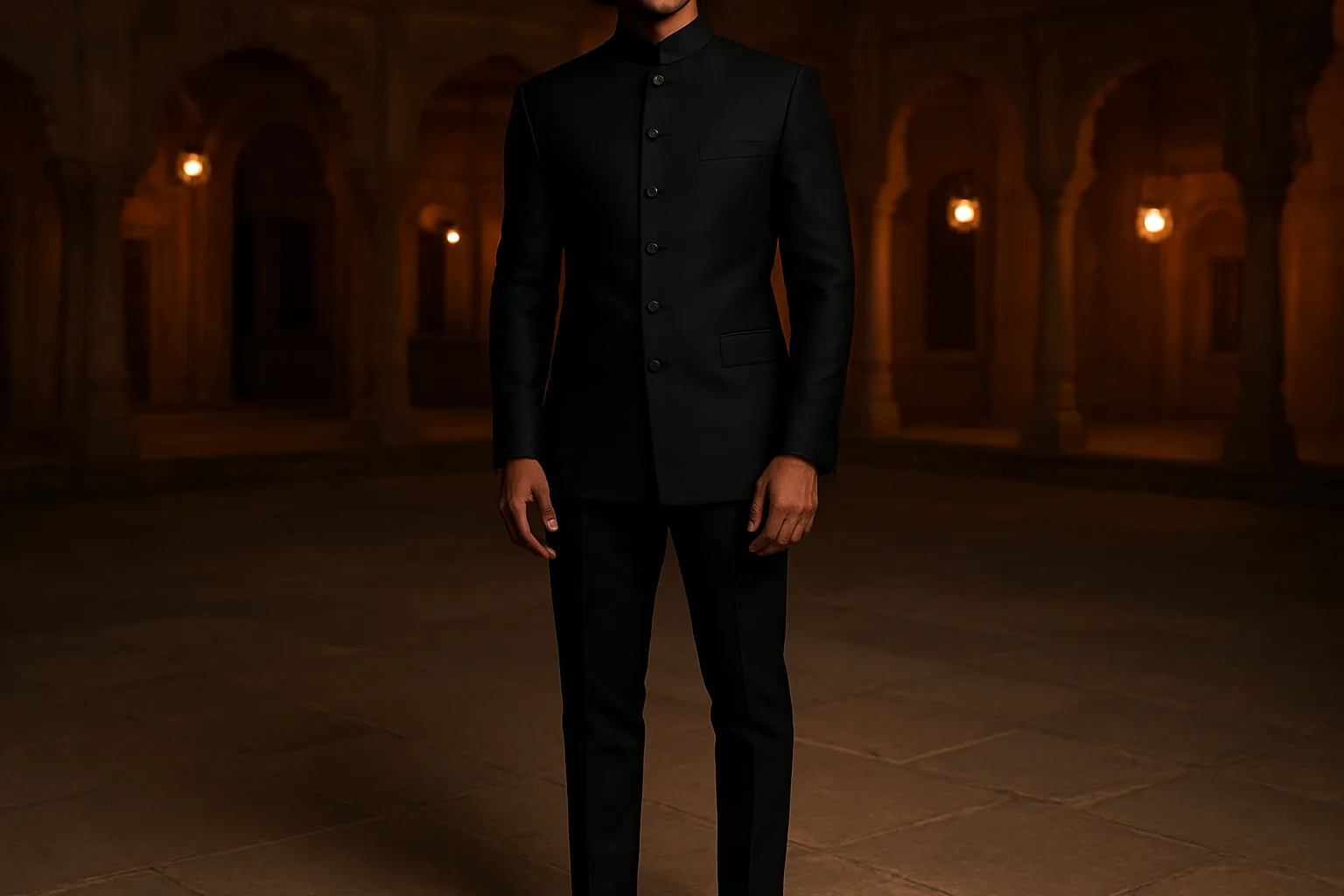
- Jodhpuri coat (bandhgala): "bandhgala" means closed neck. The style is commonly traced to the princely state of Jodhpur, with a closed high collar, structured shoulders and a tailored fit. Black, navy and ivory bandhgalas are wedding and reception staples.
- Prince coat: a longer, often embellished coat with a high collar, sitting between a bandhgala and a sherwani in length.
- Sherwani and achkan: the Royal Ontario Museum describes the sherwani as based on the achkan, falling below the knee, more tailored, with Western-style buttons. It is the groom's classic.
- Indo western coat for men: long jackets and asymmetric coats worn over kurtas or slim trousers; see our kurta with jacket guide.
For a winter wedding, you can wear a plain black or camel overcoat over any of these when you are outdoors.
How to Buy an Overcoat That Fits
- Try it over what you will wear. Bring or wear a blazer or thick sweater when you try a coat, because an overcoat must fit over layers.
- Check the shoulders. The seam should sit just past your natural shoulder, with no dent at the top of the sleeve.
- Button it up. It should close without pulling into an X shape across the chest or stomach.
- Check sleeve length. Sleeves should cover your blazer or shirt cuff completely.
- Pick the length for your height. Shorter men usually look better in mid thigh to just above the knee; taller men can carry knee length or longer.
- Read the fibre label. A high wool percentage is warmer and drapes better than a mostly synthetic blend.
Caring for Wool Coats
Brush your coat after wearing it to remove dust and lint, and let it air out before putting it away. Hang it on a broad, shaped hanger so the shoulders keep their form, with space around it in the cupboard. Check the care label: many tailored wool coats carry a circle symbol meaning professional cleaning, and a cross through the washtub means no home washing. Spot clean small marks with a damp cloth and have the coat professionally cleaned at the end of the season before storing it in a breathable cover.
Questions men ask
Which colour coat is best for men?
For a first overcoat, black or charcoal is the most versatile, especially for evenings, weddings and formal wear. Navy is equally smart and slightly softer. Camel and brown are the classic daytime colours and look excellent over grey and navy. Pick the one that matches most of your suits and trousers.
Can I wear a black coat for a wedding?
Yes. A black overcoat over a dark suit, bandhgala or kurta set looks elegant at winter weddings and receptions, especially at night. Choose a slim single-breasted cut in wool, and keep it well brushed. For the ceremony itself you can remove it to show your outfit.
What is the difference between an overcoat and a trench coat?
An overcoat is usually a wool coat built for warmth and worn over suits or knits. A trench coat is a lighter weatherproof coat, traditionally in gabardine-like cotton twill, with a belt, storm flap and epaulettes. The trench handles wind and drizzle; the overcoat handles cold.
How long should a men's overcoat be?
Most men look best in a coat that ends between mid thigh and just above the knee. Shorter men should avoid coats that go well past the knee. Long coats below the knee are the warmest and most formal, while semi long coats are easier for driving and daily commuting.
Do I need an overcoat in India?
In most of India you will not need a heavy overcoat, but in Delhi, Punjab, Uttar Pradesh and Rajasthan winter evenings, and on trips to Kashmir or abroad, a wool coat is very useful. In milder cities, a lighter trench or casual coat is more practical.
How do I store a wool coat after winter?
Brush it, have it professionally cleaned if needed, and make sure it is completely dry. Hang it on a broad, shaped hanger inside a breathable fabric cover, not sealed plastic, with some space around it in the cupboard.
Sources: Smithsonian: The trench coat in World War I · US Navy History: Peacoat · Britannica: Parka · Royal Ontario Museum: The sherwani · GINETEX care labelling brochure. Updated 14 October 2026.