Cold weather
Puffer Jacket for Men: Down vs Synthetic and Warmth
A puffer is warm because of what is inside it. Learn the difference between down and synthetic fill, what fill power really means, and you can judge any padded jacket by its label.
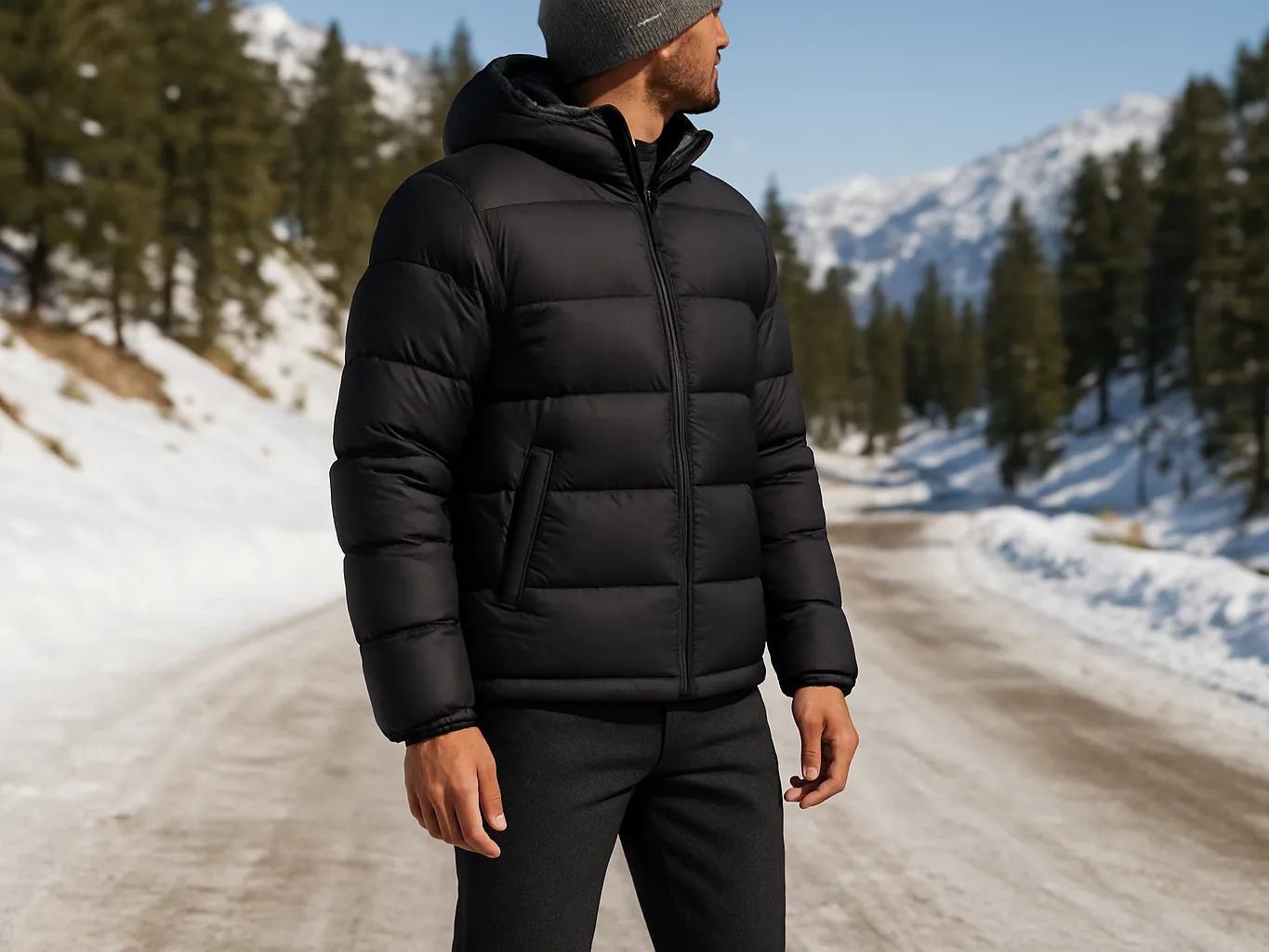
A puffer jacket for men traps warm air in stitched baffles filled with down or synthetic fibre. It is the lightest way to stay warm, which is why it has taken over winter wardrobes from Chandigarh to Kathmandu trips. But two puffers that look identical can perform very differently. The fill type, fill power and fill weight decide how warm, light and weather-proof a puffer really is.
This page focuses on insulation. For layering advice across Indian climates, see our winter jacket guide.
Down vs synthetic insulation
| Down | Synthetic (usually polyester) | |
|---|---|---|
| Warmth for weight | Highest | Lower; heavier and bulkier for the same warmth |
| When wet | Clumps, loses loft, slow to dry | Keeps insulating, dries quickly |
| Packability | Packs very small | Packs larger |
| Best for | Dry cold: Delhi winters, Ladakh, Spiti, Europe trips | Damp cold: Shimla or Darjeeling drizzle, Himalayan treks with rain |
REI notes that water-resistant treated down resists light moisture but still gets wet in heavy rain. If your winter is wet, synthetic fill or a waterproof shell over down is the safer choice.
What fill power means
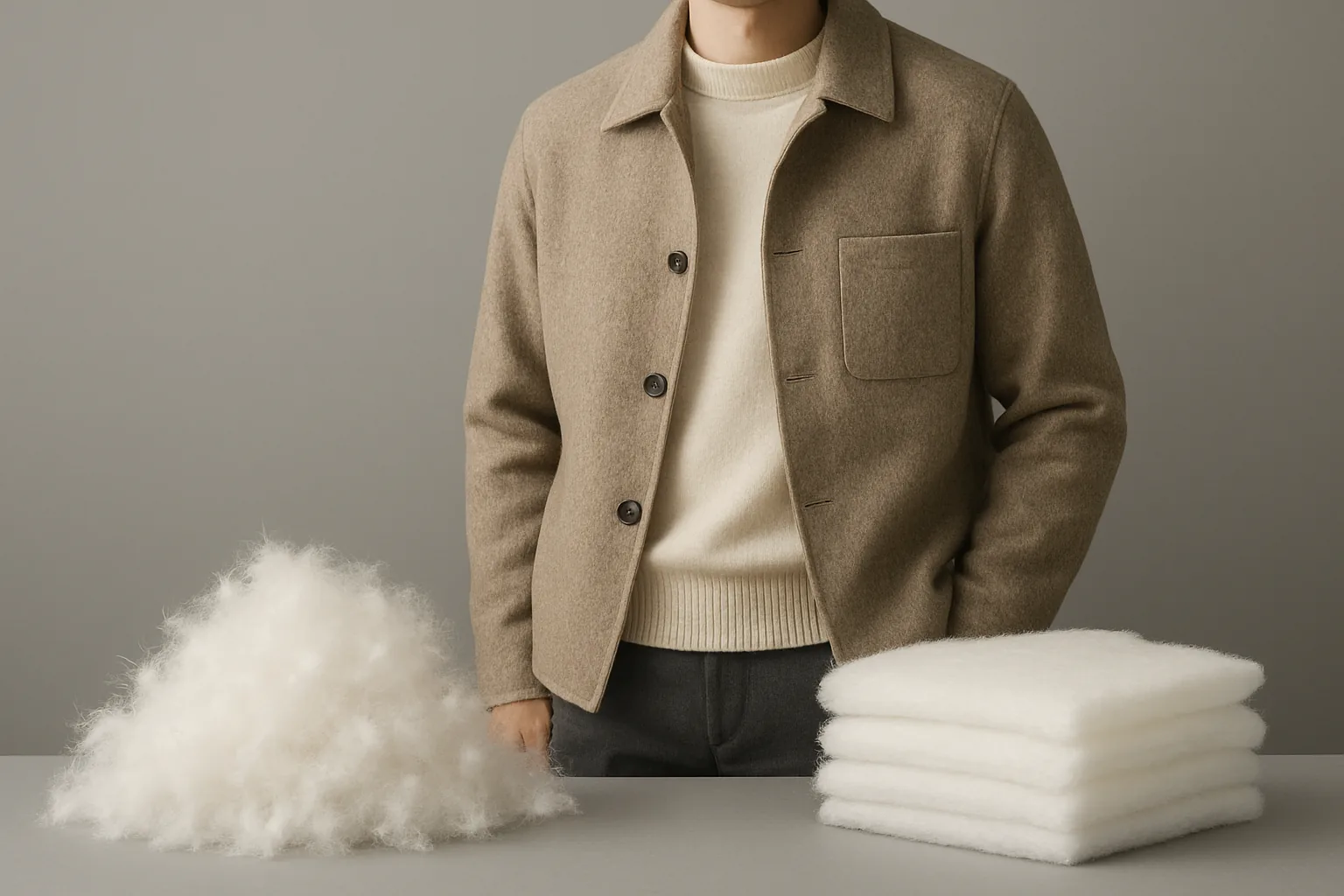
Fill power measures how well down lofts and traps heat: it is the number of cubic inches one ounce of down fills in a test device. So 600 fill power means 600 cubic inches per ounce. Higher numbers mean fluffier, higher quality down that gives more warmth for less weight.
Kathmandu, an outdoor brand, groups fill power roughly like this:
- 400 to 500: entry level.
- 550 to 650: the everyday sweet spot.
- 700 to 800: higher quality and more compressible.
- 850 to 900: premium expedition down.
REI says premium goose down can reach 900 fill power or more, while duck down tops out around 750 to 800.
Fill power vs fill weight: why a higher number is not always warmer
Fill power tells you the quality of the down. Fill weight tells you how much down is inside. A jacket with lots of 600 fill down can be warmer than a thin jacket with a little 800 fill. So a higher fill power does not automatically mean a warmer jacket. When you compare two puffers, look at both numbers, and at the thickness of the baffles when you hold the jacket up.
For synthetic jackets, compare thickness and the weight of the jacket itself in the hand, since there is no fill power number to read.
Puffer styles for men
Lightweight packable puffer
Thin baffles, packs into its own pocket. Great for travel and as a mid layer under a shell. Suits Bengaluru or Pune winters on its own.
Mid-weight hooded puffer
The all-rounder for north Indian winters. A hood helps on two-wheelers and foggy mornings.
Heavy or expedition puffer
Thick baffles, long cut, high collar. For snow trips, Ladakh and Europe in deep winter; too warm for most Indian plains.
Puffer vest
Warms your core while keeping arms free. See our sleeveless jacket guide.
Longline puffer
Reaches mid thigh. Warmest for city cold and long waits outdoors; less handy for driving or riding.
How to choose the best puffer jacket for you
- Decide on your coldest use. Daily city cold, a hill station trip or a snow trek.
- Choose fill type by moisture. Dry cold, choose down. Damp or rainy cold, choose synthetic or carry a rain shell.
- Read the label. Look for fill power and fill weight for down jackets, and the fibre type for synthetic ones.
- Check the shell. A DWR finish makes light rain bead off, but it is not the same as a waterproof jacket.
- Size for layers. Try it over a sweater or sweatshirt. It should close easily without compressing the fill.
- Check the details. Hood, chin guard on the zip, hand-warmer pockets and a hem drawcord all keep heat in.
How to wash a down jacket
Brand care guides agree on the basics. Nike recommends a front-loading machine if possible, or a mesh bag in a top loader, with cold water, a gentle or normal spin and a small load. Patagonia advises a down-specific wash and an extra rinse cycle without soap. Then tumble dry on low heat with a couple of clean tennis or dryer balls to break up clumps, repeating low cycles as needed. Make sure the jacket is completely dry before storing it, or the down can clump and smell. Store it loosely hung, not compressed, through the summer.
Styling a puffer without looking bulky
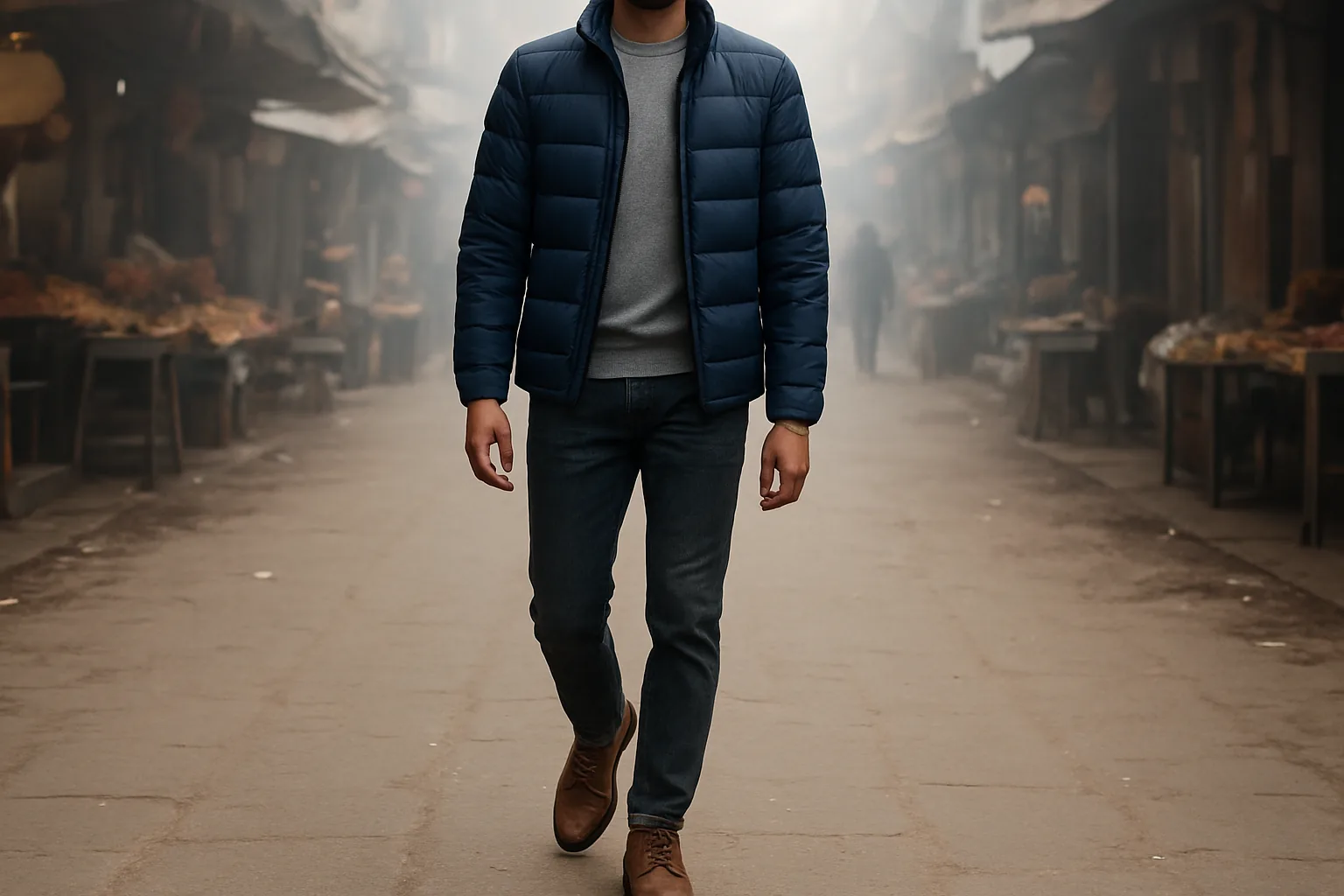
Keep the bottom half slim: tapered jeans, dark chinos or joggers and solid boots or sneakers. A matte finish in black, navy, olive or charcoal looks smarter than shiny nylon. For dressier evenings in winter, layer a puffer vest under a wool overcoat. Prefer something slimmer for mild winters? A padded bomber gives some warmth with less volume.
Questions men ask
Is down or synthetic better for a puffer jacket?
Down gives the most warmth for its weight and packs smaller, so it is best for dry cold such as Delhi winters or Ladakh. Synthetic insulation keeps you warm even when wet and dries quickly, so it suits damp hill stations and rainy treks. Many travellers carry a down jacket with a waterproof shell.
What fill power is good for a down jacket?
Fill power of 550 to 650 is commonly described as the everyday sweet spot. Entry-level down is around 400 to 500, while 700 to 800 is higher quality and more compressible. Remember that fill weight, the amount of down, matters just as much for overall warmth.
Is a puffer jacket good for snow?
A mid to heavyweight hooded puffer is good for snow trips, but down loses warmth if it gets soaked. Wear a waterproof shell over it in falling snow or rain, and layer a wool sweater or fleece underneath. Add gloves, a warm cap and good socks.
Can I wash a puffer jacket in a washing machine?
Usually yes, if the care label allows it. Use cold water, a gentle cycle and a small load, preferably in a front loader, with a down-specific wash for down jackets. Rinse well, then dry on low heat with tennis balls to break up clumps. Dry it fully before storing.
Are puffer jackets too warm for Mumbai or Bengaluru?
A heavy puffer is usually too warm for these cities. A lightweight packable puffer or a puffer vest can work on cool mornings, and is useful for travel to colder places. For daily wear in mild climates, a light bomber, denim or windcheater is often more comfortable.
How should a puffer jacket fit?
It should close easily over a sweater without squashing the insulation, with sleeves that reach your wrist when you stretch your arms forward. The hem should cover your belt line. A puffer that is too tight loses warmth, because compressed fill traps less air.
Sources: REI: down vs synthetic insulation · Kathmandu: fill power explained · Nike: how to wash a down jacket · Patagonia: how to wash and care for your down jacket. Updated 14 October 2026.