Rain, wind and sport
Rain Jacket for Men: Waterproof Ratings Explained
Every monsoon, men discover that "water resistant" and "waterproof" are not the same thing. Learn to read a raincoat's ratings and you will stay dry on the walk to the station and the ride home.
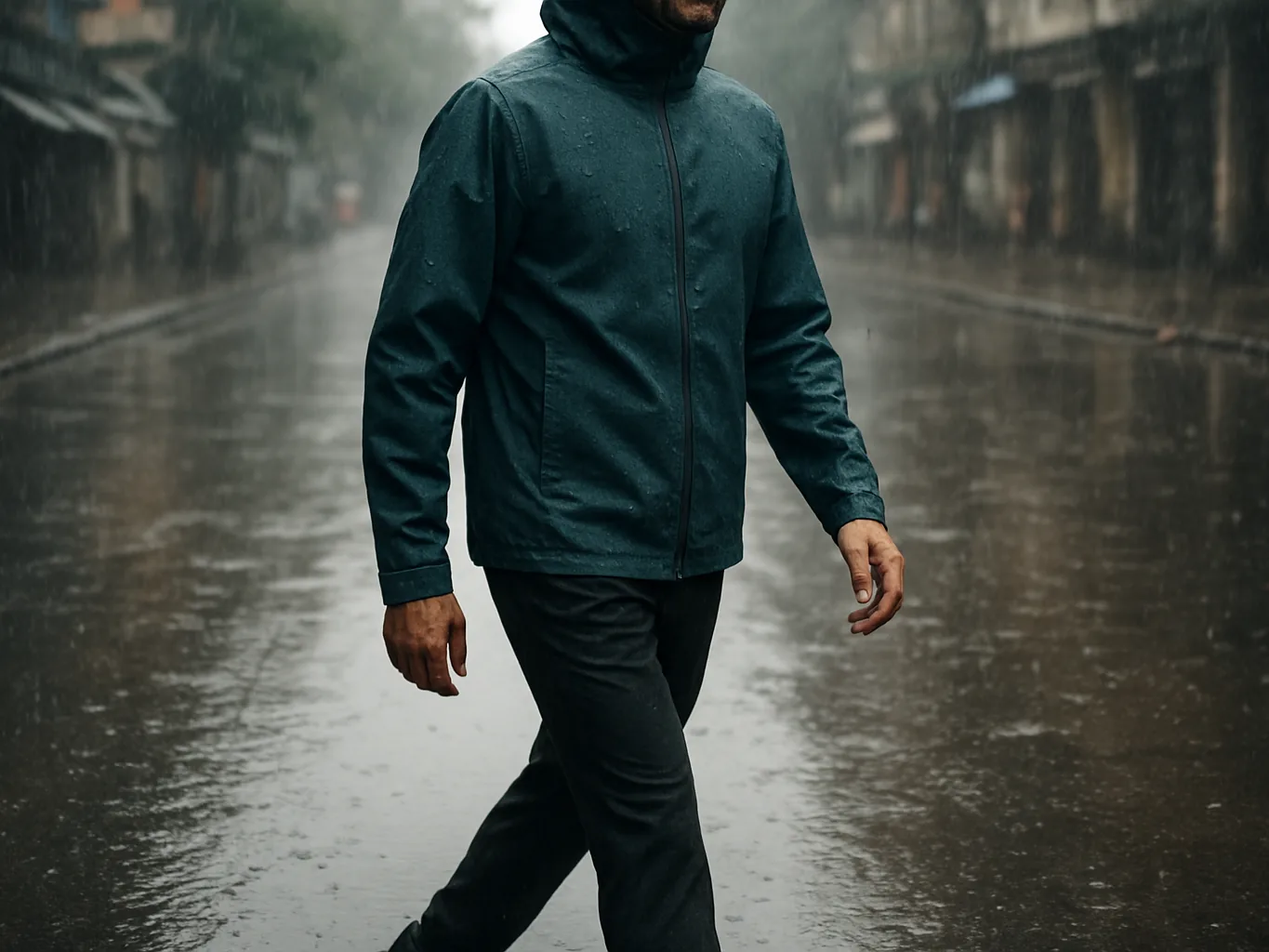
A raincoat for men has one job: keep water out while you get on with your day. In India that day may involve a flooded Mumbai street, a scooter ride through Bengaluru drizzle or a trek in the Western Ghats. Labels promise a lot, so this guide focuses on what the numbers mean, which features actually keep you dry, and which type of rain jacket suits how you travel.
For the difference between a rain jacket and a lighter wind shell, see our windcheater guide.
Waterproof ratings: hydrostatic head explained
ISO 811:2018 sets out a hydrostatic pressure method for testing how well a fabric resists water getting through. In plain terms, the hydrostatic head is the height of a column of water, in millimetres, that a fabric can hold back before droplets pass through. A fabric rated 2,000 mm held back a 2-metre column in the test.
Retailer and brand guides give these rough reference points. They are trade conventions, not a legal standard:
| Rating | What guides commonly say |
|---|---|
| About 1,500 mm | Mountain Warehouse states this is the UK minimum to call a garment waterproof |
| 2,000 mm | Light to moderate rain; Mountain Warehouse says it will not withstand a heavy, prolonged downpour |
| 20,000 mm | Described by inov-8 as a premium, top-tier rating |
For a long Indian monsoon, aim well above the entry level, and check that the seams are taped. A waterproof fabric with stitched, untaped seams still leaks.
Breathability: why some raincoats feel like a sauna
In humid weather, sweat can make you as wet as the rain. Breathability tells you how well moisture vapour escapes. It is quoted two ways:
- MVTR (moisture vapour transmission rate) in g/m2/24hr: higher is better, and 20,000 is described as a premium score.
- RET (resistance to evaporative heat transfer): lower is better. inov-8 describes 0 to 6 as excellent, 7 to 13 good, 14 to 20 OK, and over 20 poor.
REI warns that there is no universal test standard or independent certification for breathability, so figures from different brands are not directly comparable. In practice, vents, mesh linings and pit zips help as much as the number on the tag.
DWR: the coating that makes water bead
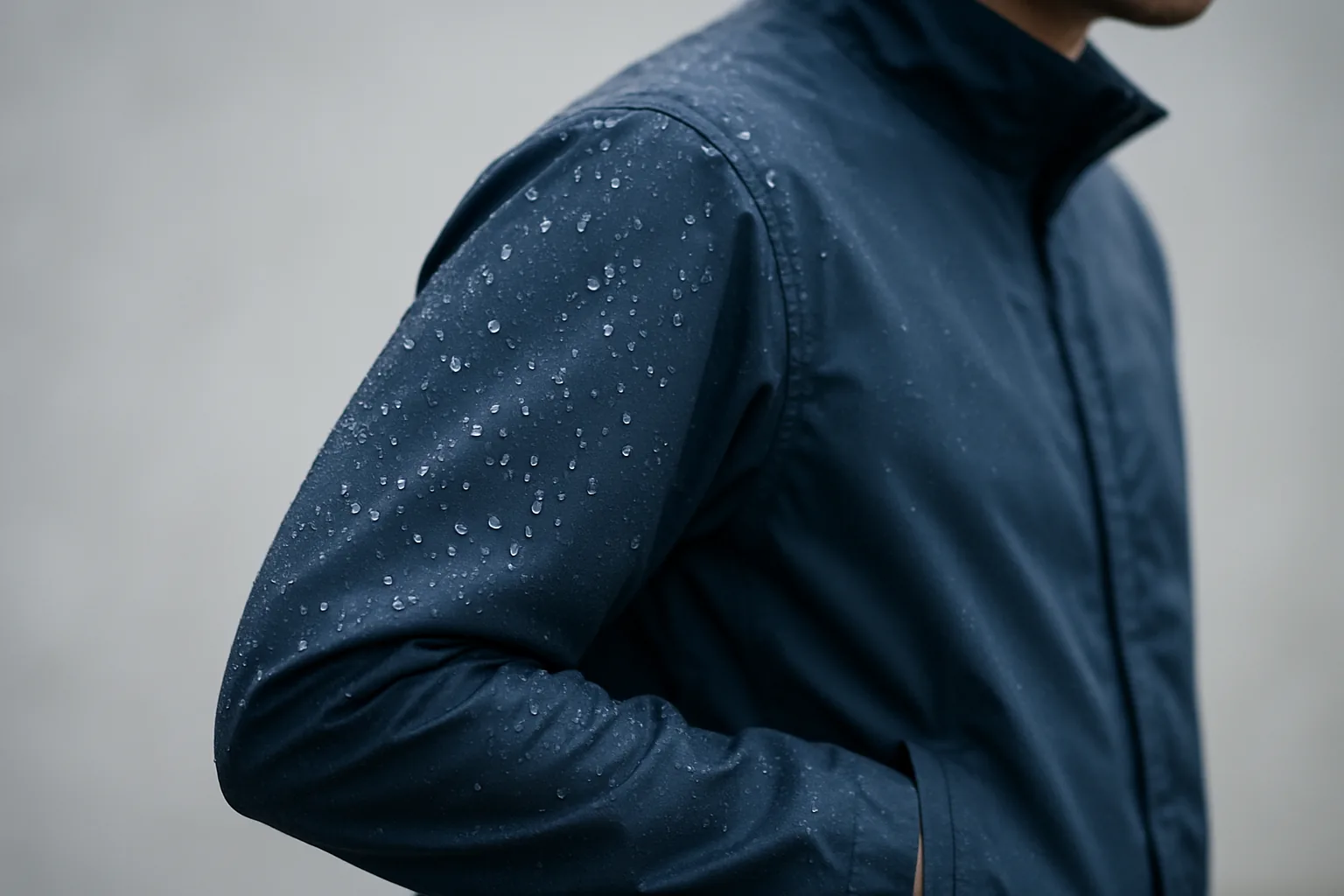
Most rain jackets have a DWR (durable water repellent) finish on the outside. REI explains that it makes rain bead up and roll off. When it wears off, the outer fabric soaks up water, called wetting out, and the jacket can feel clammy even if the membrane inside still keeps rain out. Reapply DWR when water stops beading. Dirt and body oils speed up wear, so wash the jacket regularly as the label allows.
Types of raincoats for men
Rain jacket (shell)
Hip-length, hooded, packable. The most versatile choice for walking commutes and travel.
Raincoat with pant (two-piece set)
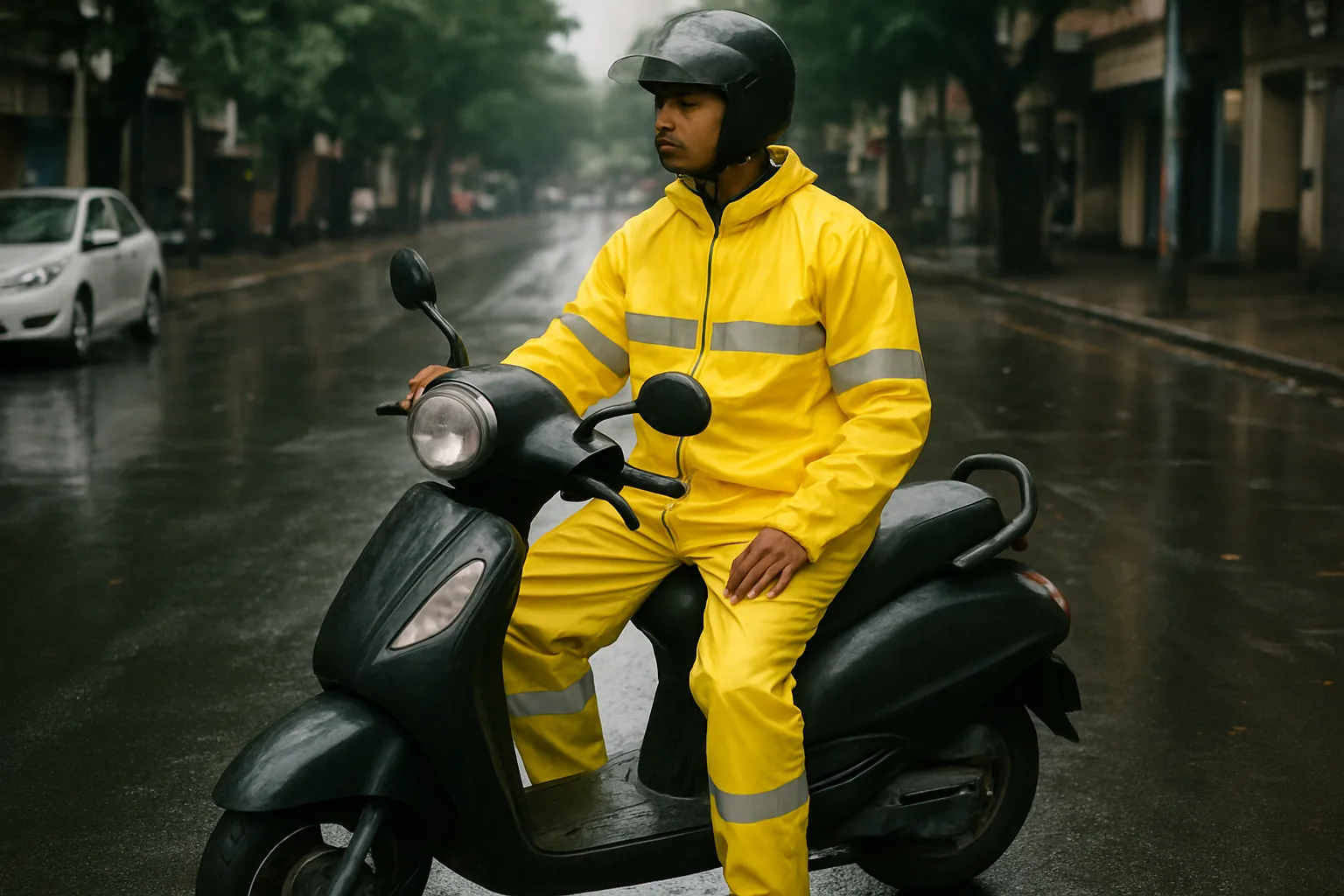
A jacket plus over-trousers. The practical rain coat for men on bikes and scooters, because it keeps your legs and lap dry too.
Long raincoat
Knee length or longer. Good for walking and standing at bus stops; less practical on a two-wheeler, where it flaps.
Poncho raincoat
A loose cape with a hood that can cover a backpack. Easy over clothes for short walks and treks, but it catches wind.
Double layer raincoat
An outer waterproof layer with an inner mesh or fabric lining for comfort. A little warmer and less clingy.
Waterproof winter jacket with hood
Insulated and waterproof, for rain and cold together, such as hill stations or winters abroad. See our winter jacket guide.
Features that keep you dry
- Taped or sealed seams, the most important detail after the fabric.
- A peaked, adjustable hood that turns with your head.
- Storm flap over the zip, or a water-resistant zip.
- Adjustable cuffs so rain does not run up your sleeves.
- Vents under the arms or across the back for humid days.
- Reflective trim for dark, rainy roads.
- Inner pocket to keep your phone dry.
How to choose a raincoat in six steps
- Name your use: walking commute, bike, trek or travel.
- Pick the type: jacket for walking, two-piece for bikes, poncho for occasional treks.
- Check the rating and seams: look for a stated hydrostatic head and taped seams.
- Check breathability features: vents and mesh linings matter in humid cities.
- Size over your clothes: try it over a shirt or office wear; on a bike, over your riding jacket.
- Test the hood and cuffs: turn your head and lift your arms in the trial room.
Raincoat for bike riders
Riders get the worst of the monsoon. Choose a two-piece raincoat with pant, a longer back hem, elastic cuffs and bright or reflective colours. Wear it over your normal clothes, or over a riding jacket. A raincoat offers no crash protection, so read our riding jacket guide for certified gear. For lighter showers on cool mornings, a windcheater may be enough.
Care and storage
After a muddy ride, rinse the raincoat in clean water and hang it to dry in shade, never folded wet. Follow the care label; many shells can be washed gently in cold water without softener. Refresh the DWR when water stops beading. Store it dry and loosely folded so the coating and seam tape do not crack. Find other weather-ready layers on our jacket for men hub.
Questions men ask
What is a good waterproof rating for a raincoat?
Mountain Warehouse, a UK retailer, says about 1,500 mm is the UK minimum to call a garment waterproof and that 2,000 mm will not survive a heavy, long downpour. For an Indian monsoon, look well above that and make sure the seams are taped. Around 20,000 mm is considered top tier.
Which raincoat is best for bike riding?
A two-piece raincoat with pant is the most practical for bikes, because it keeps your legs dry. Look for taped seams, elastic cuffs, a longer back and reflective trim. A long raincoat flaps on a two-wheeler. A raincoat offers no crash protection, so wear it over proper riding gear on longer rides.
What is the difference between water resistant and waterproof?
Water-resistant jackets, such as most windcheaters, handle light rain for a short time. Waterproof jackets are built to keep out driving rain, usually with a membrane or coating, a stated hydrostatic head rating and sealed seams. For monsoon commutes, waterproof is the one you want.
Why does my raincoat feel wet inside?
Two common reasons: sweat that cannot escape in humid weather, or a worn DWR coating that lets the outer fabric soak up water so the jacket feels clammy. Choose a raincoat with vents or mesh lining, and reapply DWR when rain stops beading on the surface.
Is a poncho better than a raincoat?
A poncho is quick to throw on, covers a backpack and is airy in humid weather, so it suits short walks and treks. It catches wind and is awkward on bikes or in busy streets. A fitted rain jacket or two-piece raincoat gives better protection for daily commutes.
How do I make my raincoat waterproof again?
Clean it first, as dirt reduces water repellency. Then apply a wash-in or spray-on DWR treatment as directed on the product and the care label. If water still leaks through at the seams, the seam tape may be failing, and the jacket may need repair or replacement.
Sources: ISO 811:2018 resistance to water penetration · Mountain Warehouse: guide to waterproofing · inov-8: waterproof and breathability ratings explained · REI: rainwear guide. Updated 14 October 2026.