Rain, wind and sport
Windcheater for Men: Wind and Light Rain Protection
A windcheater is a thin shell that stops wind from stealing your body heat. It weighs almost nothing, folds into a pocket and handles a drizzle, but it is not a raincoat.
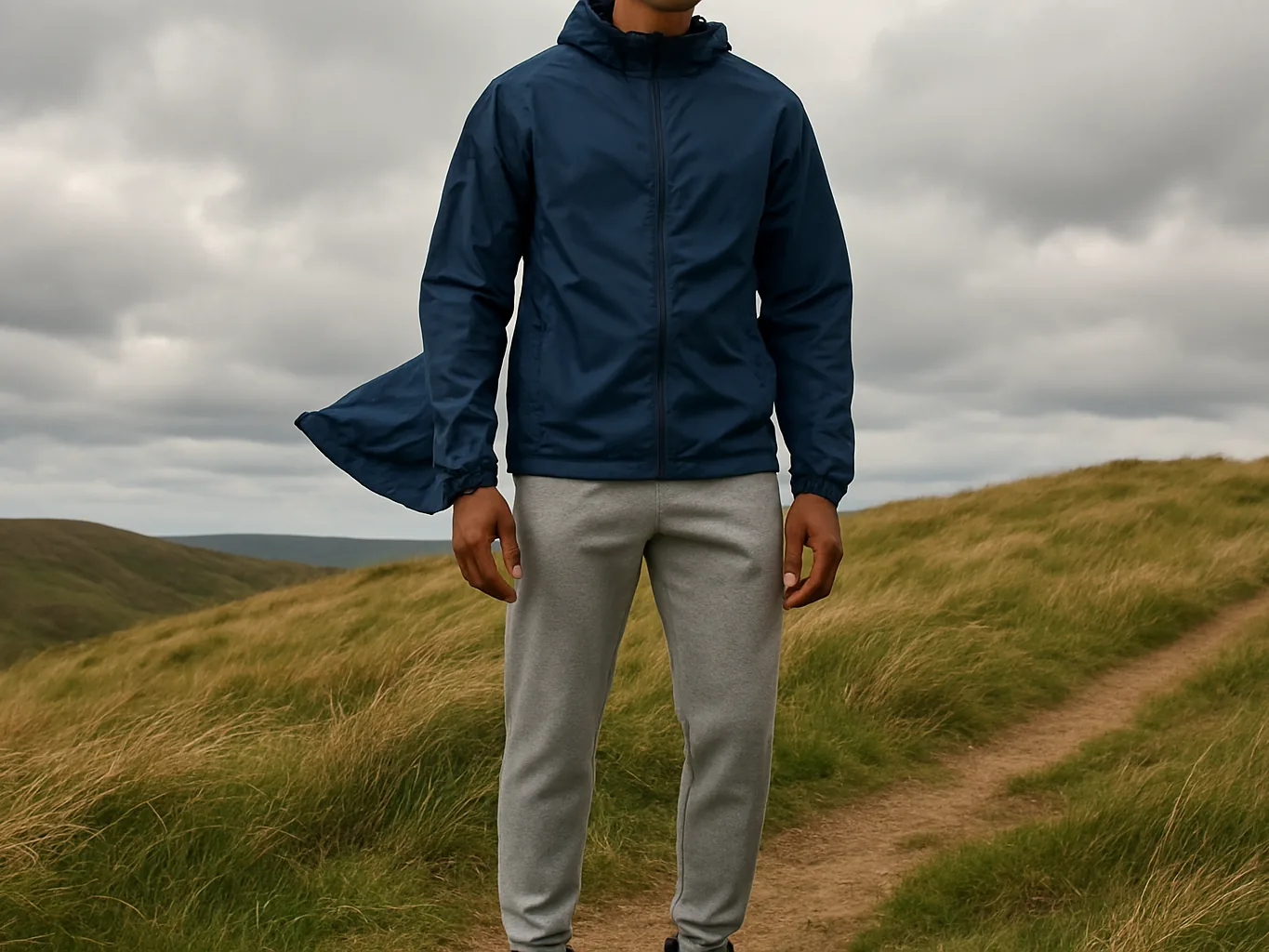
A windcheater for men, also called a windbreaker, is the simplest kind of jacket: a light shell, usually nylon or polyester, often with a hood and a zip front. It keeps wind from cutting through your clothes, which makes you feel much warmer than the thin fabric suggests. That is why riders, runners and trekkers carry one almost everywhere.
This guide explains what a windcheater can do, where it falls short, and how to choose one for biking, sports or travel.
Windproof, water resistant and waterproof: know the difference
These three words get mixed up in shops, and the difference matters when the weather turns. REI, the outdoor retailer, defines them like this:
| Label | What it means | Typical jacket |
|---|---|---|
| Windproof | Material that does not let wind through | Windcheater, softshell, any waterproof jacket |
| Water resistant | Handles light rain for a short time | Most windcheaters |
| Waterproof | Enough to keep out driving rain | Rain jacket with taped seams |
REI also notes that any waterproof jacket is windproof, but a windcheater is not automatically waterproof. If you need protection in a Mumbai or Kerala monsoon, buy a proper rain jacket.
When a windcheater is the right jacket
- Two-wheeler commutes: early mornings in winter and on highways, where wind chill makes 15°C feel much colder.
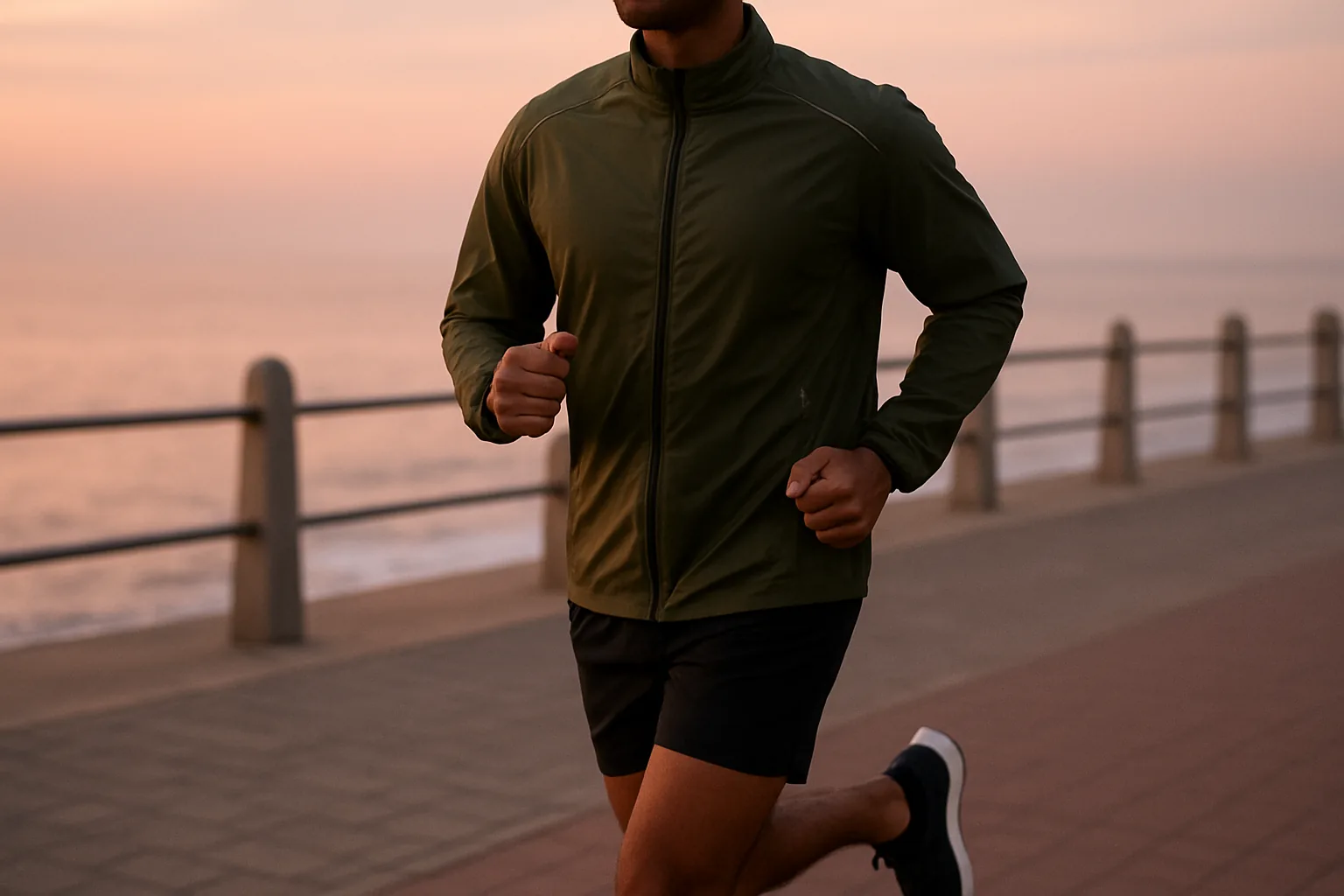
- Running and cycling: it blocks wind without the bulk of a jacket, and you can tie it round your waist when you warm up.
- Treks and hill stations: as the outer layer over a fleece or light puffer, it adds a lot of warmth for very little weight.
- Travel: it packs into a bag and handles cold flights, windy beaches and sudden drizzle.
- Cricket and football: on breezy grounds, a sports windcheater keeps muscles warm between innings or halves.
Features to look for
Hood
A peaked, adjustable hood stays on in wind. A hood that rolls into the collar keeps the look tidy.
Fabric and finish
Nylon is a common lightweight choice; ripstop weaves resist tears. A DWR (durable water repellent) finish makes light rain bead and roll off.
Packability
A lightweight windcheater for men that packs into its own pocket is easier to carry daily.
Vents
Mesh linings, back yokes or underarm vents let heat out when you run or ride.
Cuffs and hem
Elastic cuffs and a drawcord hem stop wind blowing up inside the jacket, which matters on a bike.
Reflective details
Useful for early morning runs and evening rides on poorly lit roads.
Lining
A light fleece or mesh lining makes a winter windcheater warmer; unlined versions are cooler and pack smaller.
Windcheater for bike riding: an honest note
A windcheater for men for bike commutes keeps the wind off and is far better than riding in a shirt. But it offers no abrasion or impact protection in a fall. If you ride a motorcycle regularly, especially on highways, read our riding jacket guide on certified protective gear. Many riders wear a windcheater or rain shell over a mesh riding jacket in the monsoon.
How to choose the right size
- Decide what you will wear underneath: a T-shirt for running, a fleece for treks, a sweater for winter rides.
- Check the brand's size chart against your chest measurement, taken under the arms.
- Try it over that layer. It should zip easily with a little room to move.
- Reach forward and raise your arms. The sleeves should still cover your wrists, which matters on a bike.
- For riding, choose a slightly longer back hem so it does not ride up when you lean forward.
How to style a windcheater off the field
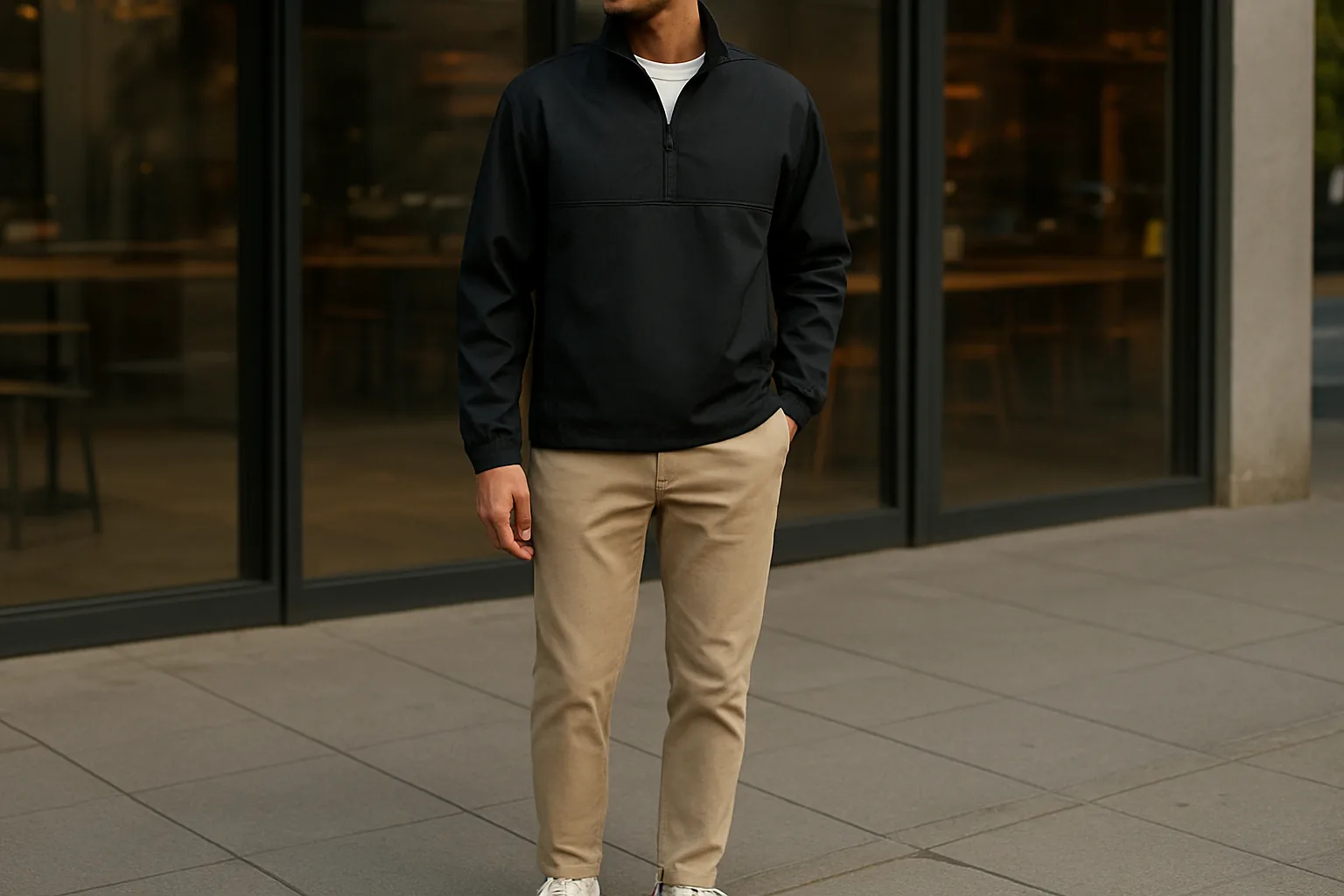
Windcheaters are sporty by nature, but a solid navy, black, olive or stone colour in a matte finish looks neat with jeans, chinos and sneakers. Wear it over a plain T-shirt or a crew-neck sweatshirt. Avoid big contrast panels if you want to wear it to college or a casual office. For more athletic layers, see our guide to sports and gym jackets.
Windcheater care
Wash it in cold water on a gentle cycle with a mild detergent, zips closed, and avoid fabric softener, which can affect water repellency. Line dry in shade. REI advises that when water stops beading on the surface, the DWR finish has worn off and should be reapplied with a wash-in or spray-on product. Store it loosely folded in a dry place. Explore more jackets by weather on our jackets for men hub.
Questions men ask
Is a windcheater waterproof?
Usually not. Most windcheaters are windproof and water resistant, which means they handle light rain for a short time. In a heavy or long downpour, water will soak through, especially at the seams. For monsoon commutes, choose a jacket labelled waterproof with taped seams, or wear a rain jacket over your windcheater.
Is a windcheater good for winter?
On its own, a windcheater is not warm, but it blocks wind, which makes your other layers far more effective. Over a sweater, fleece or light puffer it works well for winter rides and treks. Lined winter windcheaters add a thin fleece or mesh layer for a little extra warmth.
Which windcheater is best for bike riding?
Choose a windproof shell with elastic cuffs, a drawcord hem, a longer back and reflective details for visibility. A hood that fits under or folds away from your helmet is useful. Remember a windcheater gives no crash protection, so regular riders should consider a certified riding jacket.
What is the difference between a windcheater and a jacket?
A windcheater is a type of jacket: a thin, unpadded shell designed mainly to block wind. Other jackets add insulation, like puffers, or heavy fabric, like denim and leather. A windcheater is lighter and more packable, but provides much less warmth on its own.
How do I wash a windcheater?
Close the zips, turn it inside out and wash in cold water on a gentle cycle with mild detergent. Skip fabric softener and bleach. Line dry in the shade. When rain no longer beads on the fabric, reapply a DWR treatment to restore water repellency.
Can I use a windcheater for running?
Yes. A light, breathable windcheater with vents is ideal for cool morning runs. It blocks wind chill while you warm up and is easy to tie around your waist or stuff in a pocket once you heat up. Reflective details help on early or late runs.
Sources: REI: rainwear guide. Updated 14 October 2026.